Physical Address
23,24,25 & 26, 2nd Floor, Software Technology Park India, Opp: Garware Stadium,MIDC, Chikalthana, Aurangabad, Maharashtra – 431001 India
Physical Address
23,24,25 & 26, 2nd Floor, Software Technology Park India, Opp: Garware Stadium,MIDC, Chikalthana, Aurangabad, Maharashtra – 431001 India

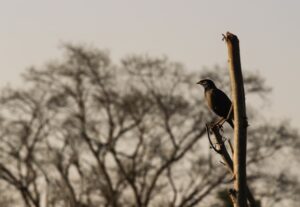
India’s cities are heating up in ways that make life harder for birds and other wildlife, wildlife scientists warn. As temperatures rise in urban areas, many bird species struggle to find shade, water, and survivable habitats during the hottest months of the year. Unlike rural regions, where natural land cover can help regulate temperature, built environments made of concrete and asphalt absorb and hold heat, leaving little respite for creatures trying to cool down. Rescue groups across several Indian cities, including Delhi, Ahmedabad, and Bengaluru, have reported an increase in birds found weak and dehydrated during heatwaves. Evidence from ecological studies and field observations now shows that the combined pressures of rising city heat and shrinking green spaces are pushing some bird populations to the brink of ecological stress.
Urban Heat Islands Are Making Cities Heat Traps
Urban heat island effects occur when paved streets, buildings and other human structures trap heat during the day and release it slowly at night. This process leaves city centres consistently warmer than nearby rural areas. In Indian metros such as Delhi, Ahmedabad, Bengaluru, and Mumbai, local temperature measurements show urban surface hotspots several degrees hotter than surrounding regions.
This extra heat not only affects human comfort but also reduces the availability of natural resources that birds depend on. Trees and water bodies that once offered shade and drinking spots have been lost to construction or degraded by pollution. Birds, especially smaller species with fast metabolisms, suffer from dehydration and heat stress when they cannot find cool microclimates, and prolonged exposure to such conditions can reduce breeding success and survival rates.
Scientific Studies and Rescue Reports Show Declining Bird Diversity
Recent scientific mapping of urban temperature patterns finds a clear correlation between hotter city patches and lower bird numbers. In Bengaluru, researchers found reduced bird abundance in the hottest areas, while long-term observations in the Western Ghats show that species dependent on cooler forest areas are increasingly absent from warmer, built-up zones. Studies from other countries also link stronger surface heat in cities to lower overall bird species counts.
Rescue organisations report similar findings from the ground. During intense heat waves across Gujarat and Maharashtra in recent years, wildlife shelters saw spikes in admissions of dehydrated and weak birds, including pigeons, parakeets and kites. Volunteers observed that heat-related rescues were far more common in areas with little tree cover or water access, reinforcing the role that heat islands play in pressuring urban bird populations.
Urban Heat Affects Entire City Ecosystems and Requires Green Solutions
The impact of urban heat is not limited to birds alone. Higher temperatures reduce moisture in vegetation and lower insect numbers, depriving insectivorous birds of food and nesting materials. Amphibians lose breeding pools as water evaporates, and bats abandon warmer roosts. Over time, this leads to a process where only a few heat-tolerant species dominate urban ecosystems, while specialists and migratory birds become scarce or disappear.
City planners often address heat with engineering fixes such as reflective pavements or shaded corridors, but scientists stress the importance of nature-based solutions. Increasing tree cover, restoring wetlands and creating connected green corridors can cool the air while offering habitats for wildlife. In some city areas with thick canopy cover, air temperatures are several degrees lower than in surrounding built zones, showing the cooling power of vegetation. Public efforts such as planting shade trees and providing water stations also make a real difference to urban birds struggling with rising heat.
References:
https://science.nasa.gov/kids/earth/what-is-an-urban-heat-island
https://esajournals.onlinelibrary.wiley.com/doi/10.1002/eap.70039