Physical Address
23,24,25 & 26, 2nd Floor, Software Technology Park India, Opp: Garware Stadium,MIDC, Chikalthana, Aurangabad, Maharashtra – 431001 India
Physical Address
23,24,25 & 26, 2nd Floor, Software Technology Park India, Opp: Garware Stadium,MIDC, Chikalthana, Aurangabad, Maharashtra – 431001 India

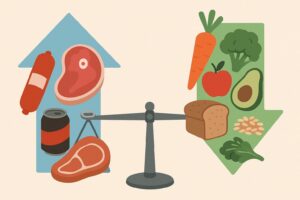
A new study from Chalmers University of Technology in Sweden has revealed a promising policy approach: shifting taxes away from healthy, sustainable foods and imposing higher levies on items that are harmful to both health and the climate. The findings suggest this strategy could save lives, prevent disease, and reduce greenhouse-gas emissions all without increasing household grocery bills.
Published in the journal Ecological Economics, the study explores what happens when value-added tax (VAT) is removed from fruits, vegetables, legumes, and whole-grain products, while higher taxes are applied to beef, lamb, pork, processed meats, and sugar-sweetened beverages. Using Swedish supermarket sales data, the researchers estimate that about 700 fewer people under the age of 70 would die prematurely each year in Sweden under this “cost-neutral food tax reform” scenario.
Why This Matters
Diets rich in red meat, processed foods, and sugary beverages are major contributors to cardiovascular disease, stroke, type-2 diabetes, and certain cancers. The study found the greatest health benefits came from reductions in colorectal cancer and coronary heart disease, followed by fewer strokes and cases of diabetes.
At the same time, livestock production, especially beef and lamb, carries a heavy climate footprint. By discouraging the consumption of these high-impact foods, the proposed tax shift could significantly reduce emissions while nudging consumers toward healthier choices.
Crucially, the study found that such a policy could be designed to be budget-neutral for households. While some items become more expensive, others become cheaper because of VAT removal, keeping the average grocery bill stable. This balance is essential to prevent low-income families from being unfairly burdened.
What the Numbers Show
The research outlines a clear picture of how such a system might work:
These combined effects demonstrate how a tax shift could deliver both health and climate gains simultaneously.
Why a Food Tax Shift Works Better Than Education Alone
The researchers argue that while nutrition education and awareness campaigns are valuable, they rarely shift population-wide behavior on their own. Taxes and subsidies, by contrast, change the price signals consumers face every day.
By making nutritious, low-carbon foods cheaper and high-impact foods more costly, the system helps consumers make better choices effortlessly. This “nudge” effect reaches across all income levels and age groups, creating collective impact that voluntary programs often fail to achieve.
Could This Work Beyond Sweden?
Although the study focuses on Sweden, its lessons could apply broadly to other high-income countries where diet-related diseases account for a large share of premature deaths. In many such nations, unhealthy diets cause more deaths than alcohol consumption and roughly the same number as smoking.
However, the authors note that any attempt to replicate this model elsewhere must account for local contexts including existing tax systems, dietary patterns, and cultural preferences. A one-size-fits-all solution will not work. Policymakers must also ensure complementary measures such as clear food labeling, limits on marketing unhealthy foods, and supportive environments that make healthy options more accessible.
Implications for India and Other Developing Nations
While Sweden and India are vastly different in terms of food systems and income levels, the concept raises thought-provoking possibilities for countries like India. India’s Economic Survey has already floated the idea of higher taxes on ultra-processed foods (UPFs) to curb overconsumption.
The country faces a dual challenge: widespread under-nutrition on one hand and a growing burden of obesity and diet-related non-communicable diseases on the other. Agriculture also remains a major source of greenhouse-gas emissions, especially from livestock.
A carefully designed, cost-neutral food tax reform could encourage healthier, lower-carbon eating habits for instance, promoting fruits, legumes, and whole grains over processed foods and sugary drinks. However, such a system would need to be tailored to India’s diverse diets and informal food markets, with safeguards to protect low-income consumers.
References:
https://pmc.ncbi.nlm.nih.gov/articles/PMC6971786
https://www.nature.com/articles/s43016-024-01097-5
Banner Image: AI Generated