Physical Address
23,24,25 & 26, 2nd Floor, Software Technology Park India, Opp: Garware Stadium,MIDC, Chikalthana, Aurangabad, Maharashtra – 431001 India
Physical Address
23,24,25 & 26, 2nd Floor, Software Technology Park India, Opp: Garware Stadium,MIDC, Chikalthana, Aurangabad, Maharashtra – 431001 India

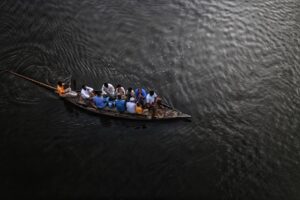
In Sri Lanka’s villages, climate change is quietly reshaping lives. More frequent droughts, erratic monsoon rains and rising seas are undermining farming and fishing – and pushing families to seek work far from home. Over the past decade, severe weather has driven millions of internal displacements. Experts report over 3.4 million disaster-driven moves between 2008 and 2022, including 500,000 people uprooted by the 2017 floods and landslides and nearly 2 million affected by that year’s drought across 17 districts . In effect, climate shocks – from flash floods to creeping coastal erosion – are adding a new, hidden driver of migration. More details can be read here
Climate-driven shocks in Sri Lanka
Sri Lanka’s climate stressors span fast and slow onset events. On the one hand, “floods, landslides, high winds and storms” strike frequently, washing away homes and farmland. On the other hand, the traditional dry-season farming calendar is collapsing: prolonged droughts, soil salinity and unseasonable rain spells now regularly “disrupt and threaten agricultural livelihoods and food security” in rural dry zones . In the north and east, for example, villages report monsoon rains that fail to materialise. One study notes that nearly 97% of farmers in a Trincomalee had already faced droughts and shifting rainfall patterns, and 84% named drought as the main driver of migration . In short, crop failures and tank-irrigation shortages are leaving farmers no choice but to send family members elsewhere to earn money. A case study done by SLYCAN trust in Trincomalee district about the internal migration can be read here
Sri Lankan farmers salvage what they can from a drought-parched paddy field. In the northwest, poor rains leave irrigation tanks empty, destroying most of the year’s crop. With little work on the farm, many young people head to cities each season. More details can be read here. In a participatory research done by Janathakshan GTE Ltd, in collaboration with Climate Action Network South Asia.
These changing weather patterns are widely recognised at the highest levels. Sri Lanka’s climate experts have warned that “changing rainfall patterns, water scarcity, and drought” are among the most severe climate impacts on the country . Indeed, once-reliable irrigation systems – ancient cascade tanks and canals – are crumbling, and farmers watch helplessly as wells and reservoirs dry out. In a summary, without stored water in the tanks and no rain for irrigation, “paddy cultivation” becomes impossible, so villagers must search for work in the cities .More details can be read here
Hard-hit rural communities.
The worst effects are felt by subsistence farmers and fisherfolk. In Anuradhapura, Trincomalee and other dry-zone districts, villagers describe a perilous pattern: every few years a long dry spell forces them to exhaust savings and sell livestock. Then, when a harvest does come, yields are so low that many young men must go out to work temporarily in the city between seasons. This cyclical migration is driven by necessity, not opportunity. The main goal of this migration is providing a substitute income for the failing agriculture sector.
Fisher communities face a different climate threat
The sea is literally washing away homes. Along the northwest coastline (near Puttalam and Chilaw), villagers have seen beachfront houses collapse into the ocean and docks become unusable. In the fishing hamlet of Iranawila, just north of Colombo, virtually every family depends on fishing. But storm surges and even distant land-reclamation projects have pushed the shoreline hundreds of metres inland. As photographers report, fishers here lament that “they have less space to anchor their boats” and are often “unable to go fishing because of these problems”. They describe scant sea walls that already lie broken and no plan in place to protect their community. Many have lost their ancestral homes to erosion and had no choice but to move a bit further inland, leaving behind their boats and nets. More details can be read via this article.
Gender and youth on the move
Climate-induced migration affects not just geography but also who moves and who stays behind. In most rural communities, males first go to cities for seasonal or construction work, while women take on more obligations at home, caring for children and the elderly and frequently managing farms with little resources. Because of this feminisation of agriculture, women confront increased workloads yet have little decision-making authority or access to loans and land.
At the same time, young people are increasingly escaping drought-affected villages, seeking jobs or education in towns. Many rural youths see migration as their only way out of poverty, yet they often end up in unstable, low-paid urban work. Climate pressures are therefore accelerating a youth exodus from agriculture, raising concerns about the future of rural livelihoods and intergenerational inequalities.
Where people are going.
The result is a steady flow of internal migration towards towns and safer rural areas. Most climate-affected households send one or two working-age members – often adult sons – to find jobs in urban centers or richer districts. Studies find that “the majority of internal climate migrants in Sri Lanka are men. They move to cities like Colombo, Kandy, or Vavuniya to earn wages, while wives, children, and the elderly stay behind . Indeed, government census data show that the Western Province (home to Colombo) is by far the largest net recipient of migrants, with hundreds of thousands more moving in than out . Common destinations include:
Colombo Metropolitan Area (Western Province) – booming construction and service jobs pull many rural workers, even if only seasonally.
Kandy and other Hill Country towns – some move to Central Province plantations or cities if they have higher education or specialised skills.
Northern Province – surprisingly, a number of migrants from Eastern dry zones end up working in the North, partly due to resettlement incentives after the civil war.
Foreign countries (Gulf states, Malaysia, etc.) – while this is international migration, climate pressures have been noted as an underlying “push” factor behind Sri Lanka’s large labor migration to the Middle East and Asia.
Seasonal farmworkers typically do casual labour – construction, factories or plantation work – where wages are higher than in their home villages. Remittances back to the origin communities become an important income source. Yet this is a stressful and uncertain life: migrants often live in crowded slums or camps with few services, and the arrangement breaks extended families apart. Moreover, if climate impacts continue to worsen at home, the remittances may only patch a precarious situation rather than solving it.
Policy response – and the gaps.
Until recently, Sri Lanka had no official “climate migrants” policy. Domestic laws generally address natural disasters and planned resettlement in a piecemeal way, but climate-driven migration was not an explicit focus. National laws and policies do not sufficiently address the issue of climate change migration. However, climate mobility has begun to enter government planning in recent years. However, Sri Lanka’s 2016 National Adaptation Plan (NAP) recognises that human relocation may be necessary. The NAP, in fact, explicitly “commits to developing contingency plans for coastal relocation” of vulnerable communities. Similarly, Sri Lanka’s Paris Agreement pledge (NDC) and newer climate strategies mention the links between migration and climate hazards.
On the ground, some preparatory steps are under way. The government and aid agencies have promoted resilience-building investments – for example, upgrading irrigation works to reduce drought risk and small workshops have recommended mapping high-risk areas and planning relocations in advance. A few relocation programs exist: for instance, the National Building Research Organisation (NBRO) has relocated some communities out of steep landslide zones.
Yet significant gaps remain. There is no streamlined framework to register or assist climate-displaced people as such, nor guaranteed social support for those uprooted. Experts warn that adaptation and relocation efforts are “sporadic and underfunded”, and that data on who is migrating (and why) are very limited . In effect, policy attention is only just catching up with the problem. Sri Lanka’s NAP and climate policy signal intent to address human mobility; its first Provincial Adaptation Plans (now under development) include migration as a key issue . But to date, these are plans on paper – implementation remains uneven. In the meantime, many climate-affected families must fend for themselves, without clear national guidance or dedicated aid targeted to climate migration. More details can be read here
Looking ahead
Sri Lanka faces a steep challenge. Scientists project that as monsoons become less reliable and seas continue to rise, more communities will be at risk. By one study of World Bank estimates, nearly 19 million Sri Lankans could live in “hotspots” of extreme temperature or precipitation by 2050. Without strong adaptation, more farmers may abandon the fields, and more coastal villages may become untenable. The coming decade will test how well Sri Lanka can integrate migration into its climate resilience strategy. Experts recommend several steps: improving water storage and drought-tolerant agriculture in rural areas; identifying safe zones with jobs and services for potential migrants; and actively planning relocations (both temporary shelters and permanent resettlement) for the highest-risk zones. More details can be read here
In the end, climate-induced internal migration is a human story as much as an environmental one. It is unfolding quietly – often in families’ backyards – but it has profound implications for Sri Lanka’s economy and society. By documenting these shifts now, researchers hope to prompt better support for affected communities. And by weaving migration planning into climate policy, Sri Lanka may steer this modern migration away from crisis and toward adaptation.
References
https://belonging.berkeley.edu/climatedisplacement/case-studies/sri-lanka
https://slycantrust.org/post/addressing-climate-related-migration-in-sri-lanka
Banner Image: (Representative) Photo by Tonmoy Iftekhar on Unsplash