Physical Address
23,24,25 & 26, 2nd Floor, Software Technology Park India, Opp: Garware Stadium,MIDC, Chikalthana, Aurangabad, Maharashtra – 431001 India
Physical Address
23,24,25 & 26, 2nd Floor, Software Technology Park India, Opp: Garware Stadium,MIDC, Chikalthana, Aurangabad, Maharashtra – 431001 India

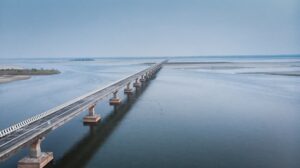
The Brahmaputra River, one of South Asia’s most powerful and culturally significant waterways, is facing unprecedented ecological and social stress due to the twin forces of climate change and rapid hydropower development. A new study published in Environmental Science & Policy highlights how this double exposure is fundamentally reshaping the river’s flow and threatening the lakhs of people who rely on its waters for their livelihoods.
Changing Climate, Changing River
Originating in the Tibetan Plateau and coursing through the Eastern Himalayas before entering Northeast India, the Brahmaputra is already vulnerable to the effects of a warming planet. Changing monsoon patterns, accelerated glacial melt, and more frequent extreme weather events are disrupting the river’s seasonal rhythms. But aggravating these natural stresses is an increase in dam-building projects across the basin. With over 160 existing and planned hydropower projects, the natural flow of the Brahmaputra and its tributaries are being disrupted and transformed into engineered or tightly-managed flows.
Communities at Risk
The study, conducted by a team of researchers from India and Europe, warns that this intersection of climate disruption and infrastructure development is intensifying risks for communities along the riverbanks—especially in the Indian states of Arunachal Pradesh and Assam. “The combined pressure of shifting river flows and dam infrastructure could significantly reduce the adaptive capacity of these communities,” the authors warn. Local populations are facing greater flood hazards, the erosion of traditional livelihoods, and significant ecosystem degradation.
Basin-Wide Impacts
Using a combination of hydrological modelling, satellite data, and community interviews, the study reveals how glacial-fed surges, erratic rainfall, and upstream dam releases are altering water levels and sediment flows downstream. This unpredictability affects everything from farming and fishing to soil fertility and water quality. “The Brahmaputra is not just a river—it’s a lifeline for millions across the region,” the researchers stress.
They also warn that current policy frameworks remain fragmented, with little coordination between climate adaptation efforts and energy infrastructure development. “Without coordinated strategies that address both climate and hydropower impacts, local resilience is likely to erode,” they caution.
A Call for Integrated Planning
To secure the future of the Brahmaputra and the communities it supports, the study calls for integrated, basin-wide planning. Recommendations include flexible dam operation protocols that account for seasonal changes, nature-based flood protection solutions, improved early warning systems, and most importantly, inclusive governance that gives voice to local communities.
Hydropower is often seen as a sustainable solution to India’s growing energy needs, but the researchers argue that poorly planned damming can worsen the very climate vulnerabilities it aims to solve. As development accelerates across the Brahmaputra basin, the need for coordinated and climate-resilient planning is more urgent than ever.
In the face of rising temperatures, melting glaciers, and uncontrolled development, the Brahmaputra’s fate hangs in the balance—along with the lives and livelihoods of the lakhs dependent on it.
References: https://www.sciencedirect.com/science/article/pii/S2211464525000089
Banner Image: Photo by Akhil Verma on Unsplash

Comments are closed.





udv641
https://svenskapharma.shop/# katt vitlök