Physical Address
23,24,25 & 26, 2nd Floor, Software Technology Park India, Opp: Garware Stadium,MIDC, Chikalthana, Aurangabad, Maharashtra – 431001 India
Physical Address
23,24,25 & 26, 2nd Floor, Software Technology Park India, Opp: Garware Stadium,MIDC, Chikalthana, Aurangabad, Maharashtra – 431001 India
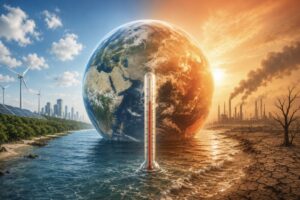
For years, 1.5°C has been treated as the line the world must not cross. The temperature limit, central to the 2015 Paris Agreement, was never meant to suggest that everything below it would be safe. Rather, it represented an important boundary beyond which the risks from climate change become increasingly severe. Now, that boundary is becoming harder to defend.
A new assessment by the United Nations Environment Programme (UNEP) says global temperatures are likely to temporarily exceed 1.5°C, with even the most optimistic scenario potentially seeing warming peak at around 1.8°C before temperatures could begin to fall. The finding is a stark reminder of how much the climate has changed and how quickly the world now needs to respond.
The message, however, is not that climate action has failed. Instead, it is that the nature of the challenge has changed. The focus is increasingly shifting from simply preventing an overshoot of 1.5°C to keeping that overshoot as small and as short-lived as possible.
The World Is Entering a More Dangerous Climate Reality
A few tenths of a degree might sound insignificant in everyday life. Globally, however, they can translate into major differences in the intensity and frequency of climate impacts.
A warmer world means greater risks from heatwaves, floods, droughts, sea-level rise and ecosystem disruption. It can put additional pressure on agriculture and water supplies while increasing risks to human health, infrastructure and economies. For vulnerable communities, particularly those in low-lying coastal areas and developing countries, the consequences can be especially severe. The latest UNEP assessment highlights the possibility of a temporary period of warming above 1.5°C followed by a gradual decline. But this does not mean that crossing the threshold is harmless or that the world can simply wait for temperatures to come down later.
Some climate impacts cannot easily be reversed. Melting glaciers, ecosystem losses and damage to coastal communities may continue even after global temperatures eventually decline. The longer temperatures remain elevated, the greater the likelihood of crossing ecological and physical tipping points.
This is why the difference between 1.8°C and 2°C still matters. So does the difference between 2°C and 2.5°C. Every fraction of a degree of warming avoided can reduce the scale of future damage. The objective, therefore, is not to treat 1.8°C as a new acceptable limit, but to recognise it as a possible peak in a world that has already delayed action for too long. The assessment points towards a future in which the world may have to navigate what scientists describe as a climate overshoot, i.e. a period when temperatures temporarily rise beyond 1.5°C before potentially declining again.
From Climate Overshoot to a Race Back Down
The pathway ahead depends on two things happening together: rapidly reducing greenhouse gas emissions and increasing the amount of carbon dioxide removed from the atmosphere.
Deep emissions cuts remain the foundation. Countries will need to accelerate the shift away from coal, oil and gas, expand renewable energy, improve energy efficiency and transform transport, buildings and industrial systems.
Reaching net-zero emissions is particularly important. As long as humanity continues adding more greenhouse gases to the atmosphere than it removes, temperatures will continue to rise.
Carbon removal could then play a role in bringing temperatures down after an overshoot. Restoring forests and other natural ecosystems can help absorb carbon dioxide, while emerging technologies could provide additional options. But these measures cannot substitute for cutting emissions. There are also limits to relying on nature. Forests, soils and other ecosystems cannot absorb unlimited amounts of carbon, and their ability to do so could become less predictable as climate change intensifies. Depending too heavily on future carbon removal while continuing to burn fossil fuels would therefore be a risky strategy.
The coming years will consequently be decisive. Governments will need to strengthen climate policies, businesses will have to accelerate the transition to cleaner technologies, and investment will need to move increasingly towards low-carbon infrastructure. There is still a reason for cautious optimism. Renewable energy has expanded rapidly in recent years, while clean technologies are becoming increasingly competitive. These developments show that the energy transition is not merely a distant ambition but an ongoing transformation. Yet the pace matters.
The world may no longer be able to prevent a temporary breach of the 1.5°C threshold. But that does not mean that the destination is predetermined. There is a vast difference between briefly overshooting 1.5°C, peaking around 1.8°C and then declining, and allowing temperatures to climb towards 2°C, 2.5°C or beyond. The climate challenge has therefore entered a new phase. The question is no longer simply whether humanity can stay below a particular number. It is how quickly emissions can be brought down, how high temperatures are allowed to rise, how long the overshoot lasts, and whether the world can ultimately bring warming back down.
The 1.5°C target may be slipping out of reach as a permanent ceiling. But the future is still being written in fractions of a degree, and every fraction avoided today could mean a safer, more liveable world tomorrow.
References:
https://www.iea.org/reports/net-zero-by-2050
https://www.sciencedirect.com/science/article/pii/S2542435122005669
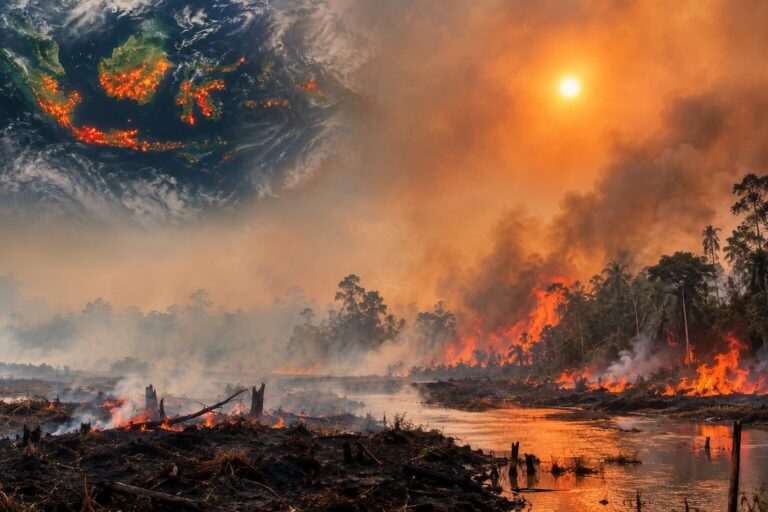
Banner Image: AI-generated
Sections of this article may have been developed with the assistance of artificial intelligence tools to support research, drafting, and language refinement. All information has been reviewed, edited, and verified by the author/editor to ensure accuracy, context, and editorial integrity. The responsibility for the final content, interpretations, and conclusions rests solely with the publisher.