Physical Address
23,24,25 & 26, 2nd Floor, Software Technology Park India, Opp: Garware Stadium,MIDC, Chikalthana, Aurangabad, Maharashtra – 431001 India
Physical Address
23,24,25 & 26, 2nd Floor, Software Technology Park India, Opp: Garware Stadium,MIDC, Chikalthana, Aurangabad, Maharashtra – 431001 India
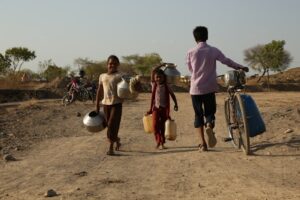
A recent report from the United Nations University Institute for Water, Environment and Health has brought a fresh warning about the state of the world’s water systems, saying humanity has crossed into what it calls “global water bankruptcy.” Researchers say this is not simply a temporary water shortage or drought but a long-term condition in which both renewable supplies and natural water stores have been used up faster than Earth can replenish them. The report paints a sobering picture of shrinking aquifers, drying rivers and lakes, and declining groundwater that is already affecting billions of people and the food systems they depend on. Lead author Kaveh Madani said that many regions now face water risks that cannot be reversed without major changes to how water is managed, shared and governed globally.
New Water Reality Beyond Crisis
According to the United Nations report, more than 75% of the global population lives in areas classified as water insecure or critically water insecure, where access to reliable fresh water is unstable for at least part of the year. This broad condition has emerged after decades of human activity that has drawn down freshwater reserves in lakes, rivers, wetlands and underground aquifers. Experts note that traditional terms such as “water crisis” and “water stress” no longer describe the situation because they imply that conditions can return to previous levels. Instead, scientists argue that sustained overuse and degradation have pushed many water systems into irreversible decline.
The report highlights that billions of people live in regions with shrinking water availability and that large areas of irrigated farmland are under high water stress, threatening food production and rural livelihoods. Economic losses from water mismanagement, land degradation and drought run into hundreds of billions of dollars globally each year. The findings suggest that efforts focused only on short-term fixes, such as improved sanitation or minor efficiency gains, are no longer adequate to address the magnitude of the challenge.
Causes Behind Water Bankruptcy
The study identifies a combination of factors driving the world into this water reality. Humans are using groundwater and surface water at rates that outpace supply, while pollution from agriculture, industry and wastewater reduces the quality of what remains. Climate change is compounding these pressures by altering precipitation patterns, increasing evaporation, and intensifying droughts in many regions. These combined influences have pushed essential natural water stores beyond safe limits, shrinking both fresh water volumes and critical ecosystems that once acted as buffers.
Agriculture, which uses about 70% of the water withdrawn for human use, is especially vulnerable because it depends heavily on water sources that are now in decline. Rivers that once reliably fed farms and cities sometimes fail to reach the sea by the end of the dry season, and many of the world’s large lakes have lost significant water over the past few decades. Without meaningful reform to how water is allocated and used, researchers say water systems will continue to deteriorate, with significant social and economic consequences.
Impacts on People and Food Systems
The effects of water bankruptcy are felt most sharply in places where water is already scarce. Cities like Tehran, Cape Town and Chennai have faced so-called “day zero” water emergencies, where municipal supplies can run dry for days or weeks at a time. In agricultural regions, declining water availability has squeezed crop yields, raised food prices and threatened rural jobs. The loss of reliable water also heightens the risk of conflict between regions and countries over shared rivers and reservoirs.
Experts say that poorer communities, smallholder farmers and vulnerable populations are often hit first and hardest because they lack the resources to adapt or access alternative sources of water. Urban growth, expanding irrigation, and ageing infrastructure add further stress to limited supplies, leaving millions more at risk of water scarcity that affects health, nutrition and livelihoods.
Calls for a New Global Water Agenda
In response to these findings, the United Nations report urges a fundamental shift in how water is managed at national and international levels. Rather than focusing solely on short-term emergency responses, it calls for what it terms “bankruptcy management,” which involves rebalancing water supply and demand within the limits of today’s degraded systems. This model aims to protect remaining water sources, reduce waste and improve governance in ways that reduce social inequity and support long-term stability.
The report also encourages countries to use upcoming global meetings, including the 2026 and 2028 UN Water Conferences, as opportunities to reset priorities and build cooperation around water security. By elevating water as a central pillar of policy, researchers say governments can address not only water scarcity but related issues such as climate resilience, food security and peace. Stronger water governance, better monitoring and fair distribution of water rights are among the steps recommended to respond to a world that is now confronting deep and sustained water challenges.
References:
https://collections.unu.edu/eserv/UNU:10445/Global_Water_Bankruptcy_Report__2026_.pdf
https://unu.edu/inweh/news/world-enters-era-of-global-water-bankruptcy
Banner image: Photo by Gyan Shahane on Unsplash
Sections of this article may have been developed with the assistance of artificial intelligence tools to support research, drafting and language refinement. All information has been reviewed, edited and verified by the author/editor to ensure accuracy, context and editorial integrity. The responsibility for the final content, interpretations and conclusions rests solely with the publisher.

Comments are closed.







[…] informes de la ONU y cubierta por diversos medios de comunicación internacionales [22, 23, 25, 26, 28], sitúa la “quiebra hídrica” no como una amenaza distante, sino como una condición […]