Physical Address
23,24,25 & 26, 2nd Floor, Software Technology Park India, Opp: Garware Stadium,MIDC, Chikalthana, Aurangabad, Maharashtra – 431001 India
Physical Address
23,24,25 & 26, 2nd Floor, Software Technology Park India, Opp: Garware Stadium,MIDC, Chikalthana, Aurangabad, Maharashtra – 431001 India

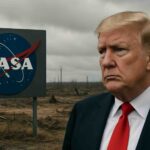
Recently, the U.S. government unveiled a set of sweeping regulatory changes that could significantly alter how the Endangered Species Act (ESA) is implemented, marking one of the most consequential shifts in American wildlife policy in decades. The proposal, released by the Department of the Interior alongside the U.S. Fish & Wildlife Service and the National Marine Fisheries Service, has ignited a national debate over the balance between environmental conservation and economic priorities.
The ESA, enacted in 1973, is widely credited with saving iconic species such as the bald eagle, peregrine falcon and American alligator. By mandating strong protections, restricting habitat destruction and requiring science-based decisions, it has long served as a cornerstone of U.S. conservation policy. But the new proposal signals a changed philosophy—one that places greater weight on economic considerations and limits the precautionary approach that has defined ESA enforcement for half a century.
Key Policy Shifts and Their Implications
At the heart of the proposal are four major changes that would reshape species protection nationwide.
First, the administration seeks to end the longstanding practice of automatically granting full protection to species listed as “threatened.” Under the current system, threatened species receive safeguards nearly identical to those given to “endangered” species, helping prevent further decline. The new approach would instead allow for case-by-case rules, meaning protections could vary widely and potentially be far weaker. Critics warn that many species enter the “threatened” category already in steep decline, and reduced protections at this stage could push them closer to extinction.
Second, the proposal would narrow the definition of “critical habitat.” Historically, the ESA allowed agencies to protect not only the areas a species currently occupies, but also regions that could be vital for future recovery—especially important as climate change shifts ecosystems. The revised rule would limit habitat designations to areas presently used by a species, excluding places that could serve as essential corridors or climate-adapted refuges. Environmental groups argue this undermines the very concept of recovery, reducing the law to a tool that merely slows extinction rather than reversing decline.
Third, economic impacts would be formally incorporated into decisions about listing species and designating habitat. For decades, the ESA required that decisions be made solely on the basis of science, without weighing the economic cost to industry or landowners. The new rule reverses this principle, opening the door for economic analyses to influence decisions about whether a species deserves protection. Conservationists say this risks sidelining scientific assessments and prioritising short-term economic gains over long-term ecological health.
Finally, future climate-related threats would receive less weight during species assessments. The agencies may adopt a narrower view of the “foreseeable future”—a key criterion in determining whether a species is likely to become threatened or endangered. Given that climate-driven changes such as shifting ranges, increased wildfires and altered wetlands are unfolding rapidly, scientists warn that discounting these factors could hinder the protection of species that are not yet in crisis but clearly on a trajectory toward risk.
Supporters and Critics Clash Over the ESA’s Future
The administration argues that the proposed changes will restore “balance,” increase regulatory clarity and reduce burdens on industries such as agriculture, energy and infrastructure. By tailoring protections to each species and limiting what they view as excessive designations of habitat, officials say they are modernising the ESA without abandoning its core mission.
Business groups, property-rights advocates and some Western states have welcomed the proposal, contending the current system is overly rigid, delays development and imposes high compliance costs. They argue that a more flexible ESA can protect wildlife while also supporting economic growth and job creation.
But conservation organisations, scientists and environmental law experts describe the reforms as a profound rollback—one that arrives at a dangerous moment. With global biodiversity declining at an unprecedented rate and roughly a million species worldwide at risk of extinction, many argue that weakening the ESA now sends the wrong message. They fear the new rules will make it harder to protect species early, allow greater habitat destruction, and create inconsistencies that undermine recovery efforts.
Legal challenges are widely expected once the rules are finalised. National environmental groups have already signalled they will argue that the changes violate the intent of the ESA and disregard scientific evidence. The coming months will likely bring intense scrutiny as courts, agencies and the public weigh in on how far the administration can go in reshaping the landmark law.
Conclusion
The proposed overhaul of the Endangered Species Act represents a pivotal moment in American environmental policy. At stake is not only the fate of hundreds of species but also the philosophical direction of U.S. conservation for decades to come. Whether the changes ultimately become law—and withstand legal challenges—will help determine how the country balances ecology, economics and climate pressures in the years ahead.
References:
https://www.nytimes.com/2025/11/19/climate/trump-endangered-species-act.html
https://www.epa.gov/laws-regulations/summary-endangered-species-act
https://www.fisheries.noaa.gov/national/endangered-species-conservation/endangered-species-act
Banner Image: AI Generated

Comments are closed.







fantastic post, very informative. I wonder why the other experts of this sector do not notice this. You should continue your writing. I’m sure, you have a great readers’ base already!
Thanks for your valuable post. Over time, I have come to understand that the particular symptoms of mesothelioma cancer are caused by a build up associated fluid relating to the lining in the lung and the chest cavity. The infection may start in the chest region and pass on to other parts of the body. Other symptoms of pleural mesothelioma cancer include fat loss, severe breathing trouble, temperature, difficulty taking in food, and inflammation of the face and neck areas. It must be noted that some people with the disease usually do not experience almost any serious indications at all.
With the whole thing that appears to be developing inside this specific subject matter, your points of view tend to be relatively radical. However, I beg your pardon, because I do not give credence to your whole plan, all be it exhilarating none the less. It looks to everybody that your opinions are not completely rationalized and in actuality you are generally your self not really totally convinced of your point. In any event I did appreciate reading it.
I have taken note that of all types of insurance, health insurance is the most debatable because of the clash between the insurance plan company’s necessity to remain making money and the client’s need to have insurance policy. Insurance companies’ commissions on wellness plans have become low, as a result some providers struggle to make money. Thanks for the strategies you share through this blog.
Fantastic website you have here but I was wondering if you knew of any user discussion forums that cover the same topics talked about in this article? I’d really love to be a part of community where I can get responses from other experienced individuals that share the same interest. If you have any recommendations, please let me know. Cheers!
Hey very nice site!! Man .. Excellent .. Amazing .. I’ll bookmark your website and take the feeds also?I am happy to find numerous useful information here in the post, we need develop more techniques in this regard, thanks for sharing. . . . . .
Today, I went to the beach with my kids. I found a sea shell and gave it to my 4 year old daughter and said “You can hear the ocean if you put this to your ear.” She placed the shell to her ear and screamed. There was a hermit crab inside and it pinched her ear. She never wants to go back! LoL I know this is totally off topic but I had to tell someone!