Physical Address
23,24,25 & 26, 2nd Floor, Software Technology Park India, Opp: Garware Stadium,MIDC, Chikalthana, Aurangabad, Maharashtra – 431001 India
Physical Address
23,24,25 & 26, 2nd Floor, Software Technology Park India, Opp: Garware Stadium,MIDC, Chikalthana, Aurangabad, Maharashtra – 431001 India

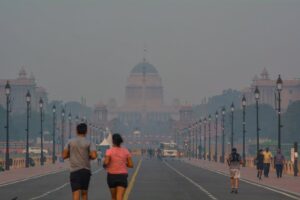
As summer temperatures rise across northern India, concerns over seasonal air pollutants emerge again, particularly ground-level ozone, a gas known to intensify during hot weather. Recent analyses by the Central Pollution Control Board (CPCB) and the Centre for Science and Environment (CSE) have shed light on how Delhi and its neighbouring cities struggle with elevated ozone levels, prompting renewed attention from health experts and environmental regulators alike.
Escalating Ozone Levels in Delhi-NCR
The CSE’s analysis of 178 monitoring stations across 10 metropolitan cities revealed that Delhi-NCR experienced the highest ground-level ozone concentration exceedances in 2024. Specifically, during the summer months (April to July), 49 of 57 regional stations recorded ozone levels surpassing the hourly standard of 180 micrograms per cubic metre. This marks an increase from 37 stations in the same period of 2023.
Adding to current concerns, new data from 2025 shows that in under two months, between March 1 and April 25, Delhi has already recorded 56 days of ozone exceedances. This spike before the peak summer signals a worsening trend in the region’s air quality and reinforces fears that ozone pollution is becoming an entrenched seasonal hazard. The analysis revealed that the Nehru Nagar station in Lajpat Nagar recorded the highest exceedance on all 56 days. It was followed closely by Najafgarh with 54 days and Major Dhyan Chand National Stadium with 50 days.
Other stations that saw over 40 days of exceedances include Sri Aurobindo Marg, Ashok Vihar, Okhla Phase 2, Wazirpur, Patparganj, Ayanagar, Vivek Vihar, Jahangirpuri, and Rohini. In contrast, stations such as Anand Vihar, IHBAS, ITO, NSIT-Dwarka, Shadipur, Chandni Chowk, DTU, East Arjun Nagar, Lodhi Road, Narela, and Siri Fort have so far recorded average ozone levels below the standard.
Health Implications of Elevated Ozone
Ground-level ozone is a highly reactive gas formed by the interaction with nitrogen oxides (NOx) and volatile organic compounds (VOCs) in sunlight. Medical professionals warn that this pollutant can lead to various respiratory issues. Dr. Pratibha Dogra, senior pulmonology and sleep medicine consultant at Marengo Asia Hospitals, explained that ozone “irritates the respiratory system, leading to inflammation of the airways, reduced lung function, and increased vulnerability to infections.”
She added that even short-term exposure can cause coughing, chest tightness, throat irritation, and shortness of breath. For those living with chronic conditions like asthma, COPD, or bronchitis, these symptoms can intensify. “Children under five, older adults with pre-existing heart or lung conditions, outdoor workers, athletes, and pregnant women are particularly vulnerable,” Dr. Dogra noted.
Sources and Formation of Ground-Level Ozone
Unlike particulate matter or soot, ground-level ozone is not emitted directly. It forms when sunlight triggers chemical reactions between NOx and VOCs, resulting from vehicle exhaust, industrial emissions, fuel evaporation, and open waste burning. The sun’s intensity during summer makes this a seasonal pollutant with significant daytime surges.
The report also drew attention to the unusual rise in ozone levels during nighttime hours in Delhi-NCR. While ozone generally disperses after sunset, the persistence of high concentrations suggests complex atmospheric dynamics and a continuous presence of precursor emissions in urban hotspots.
Environmental and Economic Consequences
Beyond human health, ground-level ozone harms crops, vegetation, and entire ecosystems. Sensitive plant species suffer cellular damage, reducing yields and compromising biodiversity. This invisible threat can undermine efforts to green urban areas and protect ecological balance.
Economically, the burden manifests in reduced agricultural productivity, increased healthcare costs, and lost workdays due to illness. As ozone impairs respiratory health, it also reduces workforce efficiency, particularly for outdoor labourers and vulnerable populations, placing added pressure on healthcare infrastructure and household incomes.
Calls for Immediate Action
Environmental groups and experts are calling for swift interventions to curb ozone pollution. They recommend stricter emission controls for vehicles and industries, investments in clean energy alternatives, and stronger public information systems to warn communities during high ozone episodes. Anumita Roychowdhury of the Centre for Science and Environment (CSE) stressed the importance of real-time, localised data to address what she described as a “hyper-local” pollutant with profound health implications.
The CPCB has also urged state pollution control boards to ramp up monitoring and develop mitigation strategies tailored to each city’s emission profile. While national air quality plans have targeted PM2.5 and PM10, experts argue that ozone deserves equal attention, given its rising impact in urban India.
The surge in ground-level ozone across Delhi-NCR presents an urgent environmental and public health challenge. As both CPCB data and medical voices make clear, the issue demands immediate attention and coordinated action from government agencies, healthcare professionals, and the public. With timely intervention, it’s possible to limit the harm and steer the region toward cleaner, healthier air.
References:
Banner image:
Photo by Saakshi Yadav on Pexels

Comments are closed.








Thiss iis a topic that’s ndar tto my heart… Manny thanks!
Where are our contaact details though?