Physical Address
23,24,25 & 26, 2nd Floor, Software Technology Park India, Opp: Garware Stadium,MIDC, Chikalthana, Aurangabad, Maharashtra – 431001 India
Physical Address
23,24,25 & 26, 2nd Floor, Software Technology Park India, Opp: Garware Stadium,MIDC, Chikalthana, Aurangabad, Maharashtra – 431001 India

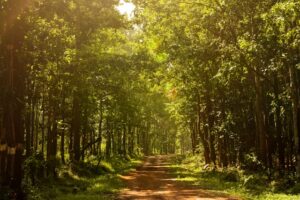
India has released its first official report on national forest accounting, providing a detailed assessment of its green cover over the past decade. The findings reveal that while the overall forest area has seen only a modest rise of 2.5% between 2010-11 and 2021-22, the country has recorded a notable jump in the very dense forest category, raising both optimism and fresh concerns about forest health.
A Decade of Mixed Gains
The first “Environmental Accounting on Forest – 2025” reveals that India’s forest cover has grown from 6,97,898 square kilometres in 2010-11 to 7,15,342 square kilometres in 2021-22, an increase of about 17,444 square kilometres over a decade. While this is a positive step, the modest rise also reflects the difficulty of expanding forests in a country where land is under constant pressure from population growth, agriculture, and development needs.
However, the quality of forests presents a more layered picture. The very dense forest segment recorded the sharpest rise, climbing by 19,000 square kilometres to reach 1,02,502 square kilometres. At the same time, moderately dense forests shrank by over 11,000 square kilometres, while open forests, defined by canopy cover of 10 to 40%, expanded by around 9,500 square kilometres. These shifts suggest that while certain regions are thickening their green cover, others are losing forest quality.
Tracking Forest Health and Vulnerabilities
Beyond area measurements, the forest accounting system examined the condition of India’s forests through indicators such as biomass, carbon storage, and regeneration. The report is compiled in two separate volumes, Volume I and vol. II, which highlight improvements in carbon and biomass stocks, an encouraging sign for climate goals, but also points to worrying trends. Declining regeneration rates mean that younger trees are not adequately replacing older ones, raising concerns about the long-term resilience of forest ecosystems.
Another vulnerability flagged is the growing threat of forest fires. As climate conditions intensify and human pressures mount, the risk of large-scale fires has increased, potentially erasing the gains seen in dense forest areas. This dual message of progress and fragility reinforces the need for stronger protective measures, sustainable land use, and better monitoring of regeneration.
Regional Variations and Policy Significance
The report also provides a state-level breakdown, revealing critical regional differences. Kerala recorded the highest increase in very dense forest cover with a gain of 4,137 square kilometres, followed by Karnataka at 3,122 square kilometres and Tamil Nadu at 2,606 square kilometres. These numbers indicate that southern states have made a significant contribution to the increase in thicker forest patches, although other states may not have achieved a comparable level of progress.
This first-of-its-kind exercise is based on the UN’s System of Environmental-Economic Accounting (SEEA), which links environmental indicators to economic value, providing policymakers with a clearer understanding of the value of natural capital. It draws on existing sources such as the India State of Forest Report and the Natural Capital Accounting and Valuation of Ecosystem Services project. By combining these inputs, the government aims to create a comprehensive record of both the quantity and quality of forest resources, thereby guiding future planning and conservation efforts.
References:
https://www.pib.gov.in/PressReleasePage.aspx?PRID=2171193
https://www.mospi.gov.in/sites/default/files/publication_reports/Environment_Volume1-25092025.pdf
https://www.mospi.gov.in/sites/default/files/publication_reports/Environment_Volume2-25092025.pdf
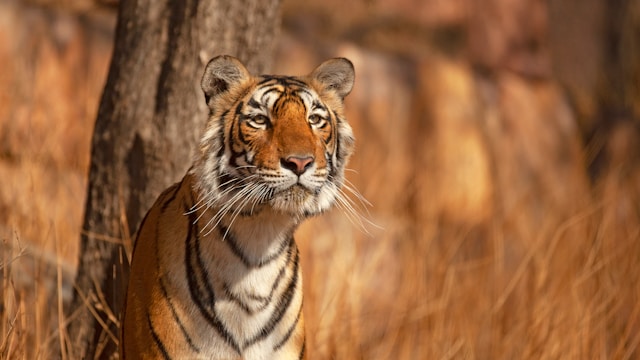
Banner image:
Photo by Subhadeep Dishant on Unsplash