Physical Address
23,24,25 & 26, 2nd Floor, Software Technology Park India, Opp: Garware Stadium,MIDC, Chikalthana, Aurangabad, Maharashtra – 431001 India
Physical Address
23,24,25 & 26, 2nd Floor, Software Technology Park India, Opp: Garware Stadium,MIDC, Chikalthana, Aurangabad, Maharashtra – 431001 India

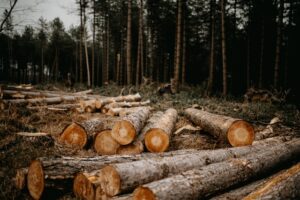
The world is deviating from its pledge to halt and reverse deforestation by 2030, as new data reveals that forests are disappearing faster than expected. According to the latest global assessment, approximately 8.1 million hectares of forest were permanently lost in 2024, an area roughly the size of England, leaving the world 63% behind the trajectory needed to meet its forest protection targets. The continued loss, primarily driven by fires, farming, and mining, is deepening the climate and biodiversity crisis while exposing a growing gap between international promises and on-ground reality.
A Growing Gap Between Promises and Reality
The world is falling far behind on its promise to halt and reverse deforestation by 2030, as forests continue to vanish at an alarming pace. The Forest Declaration Assessment 2025 reveals that global forest loss remains significantly higher than the commitments made by countries in the 2021 Glasgow Leaders’ Declaration on Forests and Land Use. Despite pledges from more than 140 nations, progress has slowed instead of accelerating, driven by human-induced fires, the expansion of farmland, and weak enforcement of forest protection laws.
In 2024 alone, around 8.1 million hectares of forest were permanently lost, an area roughly the size of England. This means the world is 63% off track from meeting the targets needed to reverse deforestation within the decade. Experts warn that without significant financial and political action, the 2030 goal could slip entirely out of reach, threatening global biodiversity and climate efforts.
Fires Turn From Exceptions to the Norm
Forest fires have become one of the most significant causes of tree loss worldwide, accounting for around 6.73 million hectares of destruction last year. Many of these fires were linked to human activity, particularly deliberate burning to clear land for agriculture. What were once considered exceptional fire seasons have now become the new normal, fueled by rising temperatures, longer dry spells, and lax monitoring systems.
Researchers note that these fires are not only devastating for forests but also for the planet’s carbon balance. In regions like the Amazon, widespread burning released hundreds of millions of tonnes of carbon dioxide into the atmosphere in 2024, worsening the global climate crisis. Scientists and environmental groups warn that without stronger fire prevention measures, the world’s remaining tropical forests could reach a tipping point where recovery becomes almost impossible.
Agriculture and Mining Continue to Drive Deforestation
Agricultural expansion remains the single most significant driver of forest loss, accounting for approximately 86% of deforestation over the past decade. Large tracts of forested land have been converted into cropland and pasture for livestock, often with government-backed incentives. The report highlights how agricultural subsidies, estimated at over $ 400 billion globally, continue to encourage production systems that rely on deforestation, rather than supporting sustainable farming practices.
Mining activities are also becoming a significant contributor to deforestation. Gold and coal extraction, particularly in tropical regions, have resulted in widespread land degradation, pollution, and the displacement of indigenous communities. The combination of agricultural expansion, fires, and extractive industries has made it increasingly challenging for countries to meet their forest protection goals.
Funding Falls Far Short of What’s Needed
One of the most significant barriers to progress is the substantial gap between current financing and the amount required to protect and restore forests. The assessment found that global public finance for forest conservation amounts to only $ 5.9 billion annually. To meet the 2030 target, that number would need to rise dramatically to between $117 billion and $299 billion each year. This shortfall continues to hinder large-scale restoration projects, leaving developing countries without the means to enforce anti-deforestation policies.
Brazil has proposed a new financing initiative, known as the Tropical Forest Forever Facility, which aims to raise $125 billion to support long-term conservation of the tropical forest. The plan would allocate around $3.4 billion each year, with 20% of the funds directed to indigenous and local communities. This approach could serve as a model for global forest finance if implemented effectively, ensuring that those living closest to forests are empowered to protect them.
A Warning and a Call to Act Before COP30
The report paints a worrying picture of global forest health just months before Brazil hosts the COP30 climate summit. The findings serve as a reminder that forest protection must be treated as a central pillar of climate action, not a secondary goal. Without addressing the root causes, from land-use policies to market incentives, the world risks losing its most valuable natural carbon sinks at a time when they are needed most.
As the planet continues to warm, fires and land clearing are accelerating deforestation at an unprecedented scale. Yet experts maintain that solutions exist, from redirecting harmful subsidies to scaling up community-led forest stewardship. The hope is that COP30 will not only bring renewed political will but also unlock the financial commitments needed to bridge the widening gap between ambition and action.
References:
https://forestdeclaration.org/wp-content/uploads/2025/10/Assessment2025.pdf
Banner image:
Photo by Annie Spratt on Unsplash

Comments are closed.








h3vz1v
e2jqzd