Physical Address
23,24,25 & 26, 2nd Floor, Software Technology Park India, Opp: Garware Stadium,MIDC, Chikalthana, Aurangabad, Maharashtra – 431001 India
Physical Address
23,24,25 & 26, 2nd Floor, Software Technology Park India, Opp: Garware Stadium,MIDC, Chikalthana, Aurangabad, Maharashtra – 431001 India

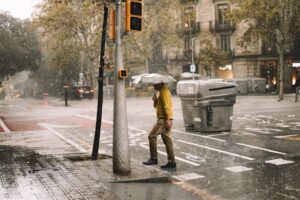
Spring 2025 has unfolded across Europe with an unsettling twist. While southern countries, such as Spain and Italy, have been drenched in hefty rainfall, northern Europe, including the UK, Germany, and the Netherlands, has experienced rainfall shortages not seen in decades. This uneven weather pattern is troubling experts and raising fresh concerns about the resilience of agriculture, infrastructure, and climate systems in a changing world.
A Tale of Two Extremes
This spring, Spain recorded its wettest April since 1961, according to national meteorological data. The intense rainfall brought relief to regions that had been battling prolonged drought, especially in the Guadalquivir basin. Reservoir levels in Spain rose to nearly 66% of capacity by mid-May, up from 47% just a few months earlier.
Meanwhile, northern Europe is facing the opposite problem. The UK has declared a drought in northwest England due to declining reservoir levels, and Germany is reporting significantly reduced rainfall, which is impacting agriculture and water supplies.
What’s Driving the Weather Whiplash?
The unusual weather patterns are attributed to shifts in atmospheric circulation. Typically, northern Europe benefits from prevailing westerly winds that bring moisture, while southern Europe is influenced by the Azores High, resulting in drier conditions. However, this spring, a blocking anticyclone over northern Europe has diverted moist air southward, resulting in heavy rains in the Mediterranean and dry spells in the north.
This reversal has led to atypical weather conditions, with southern Europe receiving more rainfall than usual and northern regions experiencing significant dryness. Such patterns highlight the complexity of atmospheric systems and their impact on regional climates.
Agriculture Caught in the Crossfire
The contrasting weather has significant and potentially devastating implications for agriculture and the environment. In southern Europe, the replenished water sources have been a lifeline for crops and ecosystems. However, the drought conditions in northern Europe threaten to decimate crop yields and water availability, raising serious concerns among farmers and policymakers.
The drought has also led to reduced river flows and stressed aquatic ecosystems in affected regions. Authorities are closely monitoring the situation, with some implementing water use restrictions to mitigate the impact.
A Climate Signal or Just the Weather?
Some of the recent rainfall and drought data echo broader climate projections. The European Environment Agency report noted that southern Europe could see up to a 30% increase in extreme rainfall events by mid-century. At the same time, northern Europe may suffer longer dry spells in spring and early summer. The spring of 2025 is an early example of such divergence.
Scientists caution against drawing straight lines from a single season to long-term climate change. However, the growing variability in seasonal weather aligns with model predictions that a warming climate would not only raise average temperatures but also disrupt rainfall patterns, jet streams, and regional water cycles.
The spring of 2025 serves as a reminder of the need for resilience in the face of climatic unpredictability. Investments in water management infrastructure, sustainable agricultural practices, and climate research are crucial for adapting to changing conditions.
References:
Heavy rainfall fills empty reservoirs in Spain, bringing drought relief and floods | Euronews
Drought declared in north-west England amid declining reservoir levels
Record rainfall in the south, drought in the north: What’s causing Europe’s unusual spring weather?
Fears for crops as drought hits northern Europe
Extreme weather: floods, droughts and heatwaves | European Environment Agency’s home page
Banner image:
Photo by Lala Azizli on Unsplash

Comments are closed.



ly8qxr
hamfbw
qoisa4