Physical Address
23,24,25 & 26, 2nd Floor, Software Technology Park India, Opp: Garware Stadium,MIDC, Chikalthana, Aurangabad, Maharashtra – 431001 India
Physical Address
23,24,25 & 26, 2nd Floor, Software Technology Park India, Opp: Garware Stadium,MIDC, Chikalthana, Aurangabad, Maharashtra – 431001 India


An X post has circulated several claims questioning renewable energy transitions, mining dependence, and nuclear power policy in Australia. While such arguments are common in online debates, a closer examination shows that some of these claims oversimplify complex energy realities or rely on outdated assumptions.
Below is a detailed fact check of each claim based on widely accepted evidence and policy realities.
Claim 1: Renewable energy and “green” policies cannot realistically replace coal for a stable electricity supply.
Verdict: Misinformation. This claim suggests that renewable energy systems are inherently unreliable and incapable of replacing coal-based power generation. While it is true that renewables like wind and solar are variable by nature, the conclusion drawn in the claim does not reflect how modern electricity systems are designed.
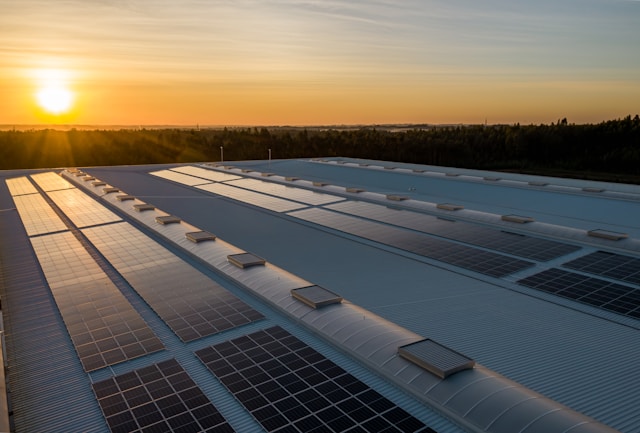
Energy transitions do not rely on renewables operating in isolation. Instead, they are built around mixed systems that combine renewable generation with battery storage, pumped hydro, improved transmission networks, and flexible backup generation. These systems are designed specifically to ensure grid stability and reliability as coal plants retire.
Coal has historically provided continuous “baseload” power, but modern grids no longer depend on a single technology to deliver stability. Today, reliability comes from diversity and flexibility, not from constant output alone. Batteries and other storage technologies can respond to demand fluctuations faster than coal plants, while interconnected grids balance supply across regions.
It is also important to note that coal plants themselves are not immune to outages. Aging coal infrastructure has increasingly been linked to unplanned failures, particularly during heatwaves when demand is highest. In contrast, renewable-heavy systems with storage and demand management have demonstrated strong resilience.
The factual nuance here is that renewables alone, without planning and supporting infrastructure, are insufficient. But that is not what energy transition policies propose. The claim falsely frames the debate as an “all-or-nothing” choice, when in reality, the transition is about replacing coal with a coordinated system of clean energy sources that together provide reliable power.
Claim 2: Policymakers and the public underestimate how dependent modern society is on mining and heavy industry.
Verdict: False / Misleading framing. This claim is often used to argue that clean energy transitions ignore the industrial foundations of modern society. However, this interpretation misrepresents how energy transitions actually work.
Modern societies are undeniably dependent on mining and heavy industry — and energy policymakers are well aware of this. What the transition changes is what is mined, not whether mining exists at all. Moving away from fossil fuels does not mean abandoning resource extraction; it means shifting from coal, oil, and gas toward minerals such as lithium, copper, nickel, cobalt, and rare earth elements.
Renewable energy technologies, electric vehicles, batteries, and transmission infrastructure all rely heavily on mining. This dependency is openly acknowledged in energy planning and industrial policy discussions. Governments around the world are actively developing strategies to secure critical mineral supply chains precisely because mining remains essential.
Where the claim becomes misleading is in implying that policymakers and the public believe a low-carbon future will be free of industrial activity. That is not supported by evidence. The real debate focuses on how mining is done, how environmental and social impacts are managed, and how supply chains can be made more sustainable — not whether mining is necessary at all. In short, the energy transition does not deny society’s dependence on heavy industry. It reshapes it.
Claim 3: Australia is not seriously using its uranium resources for domestic energy (nuclear power).
Verdict: True. This claim is factually accurate.
Australia holds some of the world’s largest known uranium reserves and is a major exporter of uranium for use in nuclear power plants overseas. However, despite this abundance, Australia does not generate nuclear power domestically.
The reason is not a lack of resources, but policy and legislation. Nuclear power generation is effectively prohibited under existing federal and state laws. While there is periodic political debate about lifting these bans, atomic power is not currently part of Australia’s official energy strategy.
Additionally, even if legal barriers were removed, nuclear power would not offer a short-term solution to replacing coal. Nuclear plants typically take well over a decade to plan, approve, and build. With coal plants retiring sooner than that, policymakers have focused on technologies that can be deployed more rapidly, such as renewables and storage. As things stand, Australia exports uranium while relying on non-nuclear technologies at home, making this claim accurate.
Conclusion
The X post blends valid concerns with misleading conclusions. Claims that renewables fail to replace coal overlook how modern power systems operate. Assertions about mining dependence oversimplify a transition that shifts — rather than eliminates — industrial activity. Only the claim about Australia’s lack of domestic nuclear power holds up fully under scrutiny.
Understanding energy transitions requires nuance. Simplistic narratives may generate engagement online, but they do not reflect the technical, economic, and policy realities shaping today’s energy systems.
References:
Nuclear power in Australia is a really bad idea. The ban ensures that is all it is
https://www.irena.org/Digital-Report/World-Energy-Transitions-Outlook-2022
https://www.sciencedirect.com/science/article/pii/S2211467X20300353
Banner Image: AI Generated