Physical Address
23,24,25 & 26, 2nd Floor, Software Technology Park India, Opp: Garware Stadium,MIDC, Chikalthana, Aurangabad, Maharashtra – 431001 India
Physical Address
23,24,25 & 26, 2nd Floor, Software Technology Park India, Opp: Garware Stadium,MIDC, Chikalthana, Aurangabad, Maharashtra – 431001 India

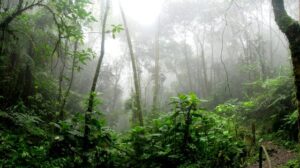
The Amazon rainforest is often described as the lungs of the Earth, but new research shows it also works like its own water pump. A study conducted in the Tapajós National Forest in Brazil reveals that during the dry season, when rainfall is scarce, trees rely on recently fallen rain stored in shallow soil layers. This recycled moisture is quickly released back into the atmosphere through transpiration, helping to generate more rainfall and keeping the forest alive during its driest months.
Shallow Soil as a Key Water Source
The research team carried out fieldwork in 2021 at two different sites: a hilltop forest with a deep water table about 40 metres below ground, and a valley forest located near a stream where groundwater was much shallower. Surprisingly, most of the water used for transpiration did not come from deep underground reserves but from the top 50 centimetres of soil.
In a year without extreme floods or drought, nearly 69% of transpiration on the hilltop and 46% in the valley was linked to this shallow layer. This indicates that trees do not wait for long-term groundwater access but instead use recent rainfall, even in the heart of the dry season, to maintain their moisture cycle.
The Role of Tree Diversity
Not every tree contributes equally to this rapid recycling process. The Amazon’s rich biodiversity means species have different strategies to access and move water. One of the most critical traits highlighted in the study is embolism resistance, which refers to a tree’s ability to keep water flowing through its tissues when the soil is dry.
Trees with high embolism resistance can continue drawing water from shallow soil and release it into the atmosphere even in harsh conditions. These species can effectively recycle recent rainfall, while less resistant ones depend more on deeper reserves or adapt differently. This is the first evidence showing that tree physiology directly influences how quickly dry-season rainfall returns to the air.
A Fragile Balance at Risk
The findings carry significant implications for the Amazon and beyond. Up to 70% of rainfall during the dry season in the region is generated by forest-driven recycling. Moisture released through transpiration also feeds “flying rivers,” invisible streams of vapour that travel across South America, supporting agriculture in major grain-producing areas far from the rainforest.
Deforestation poses a serious threat to this balance. Fewer trees mean less transpiration, weakening the ability of the forest to recycle rain and produce local and regional rainfall. Recent policy shifts in Brazil could further accelerate deforestation in the Amazon, the Cerrado savannah and the Atlantic Forest, placing ecosystems, biodiversity and food security at risk. As Brazil prepares to host COP30 later this year, the message from the research is clear. Without the rainforest’s natural capacity to recycle rainfall, both the forest itself and the climate systems it supports may struggle to survive.
References:
https://doi.org/10.1073/pnas.2501585122
https://www.weforum.org/stories/2024/07/amazon-water-flying-rivers-latin-america
Banner image:
Photo by David Riaño Cortés on Pexels

Comments are closed.






Hiya very cool website!! Man .. Beautiful .. Superb .. I will bookmark your web site and take the feeds also…I am satisfied to search out so many helpful information here in the submit, we need develop extra techniques on this regard, thank you for sharing.
солярка купить с доставкой купить топливо с доставкой
gffzfd
Very interesting subject , thanks for putting up.