Physical Address
23,24,25 & 26, 2nd Floor, Software Technology Park India, Opp: Garware Stadium,MIDC, Chikalthana, Aurangabad, Maharashtra – 431001 India
Physical Address
23,24,25 & 26, 2nd Floor, Software Technology Park India, Opp: Garware Stadium,MIDC, Chikalthana, Aurangabad, Maharashtra – 431001 India


India slips five spots to 28th in the CCPI 2027 climate ranking at COP31 as coal reliance and 2.3 TWh of solar grid curtailment offset clean energy gains.
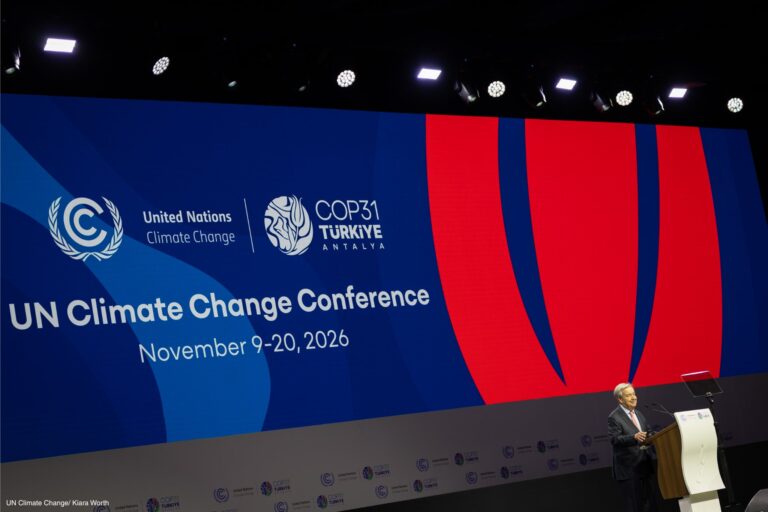
India’s position in the global climate action landscape has witnessed another setback, with the country slipping five places to rank 28th in the Climate Change Performance Index (CCPI) 2027. The latest findings, released during the 31st United Nations Climate Change Conference (COP31) in Antalya, Turkey, highlight a growing gap between India’s progress in renewable energy deployment and the challenges it faces in reducing emissions and transitioning away from fossil fuels.
With an overall score of 60.85, India has retained its ‘Medium’ performance rating. However, its declining position over the past two editions raises important questions about the pace and effectiveness of its climate action. India ranked 10th in CCPI 2025 before falling to 23rd in 2026 and now to 28th in 2027, representing a decline of 18 places in just two years. The index, jointly published by Germanwatch and the NewClimate Institute, evaluates the climate mitigation performance of 64 countries and the European Union, which together account for more than 90 per cent of global greenhouse gas emissions. It assesses performance across four key categories: greenhouse gas emissions, renewable energy, energy use and climate policy.
Renewable Energy Expansion: Progress with Persistent Gaps
One of the significant positives highlighted in the report is India’s progress in expanding renewable energy capacity. The country has made considerable investments in solar and wind energy, rooftop solar installations and electric mobility. Government initiatives supporting renewable energy procurement and domestic manufacturing have also contributed to this expansion.
A notable achievement came in June 2025, when non-fossil fuel sources accounted for 50 per cent of India’s total installed electricity generation capacity, achieving its earlier 2030 target five years ahead of schedule. This milestone reflects the country’s growing commitment to diversifying its energy mix and strengthening clean energy infrastructure.
However, the report draws attention to an important distinction between installed capacity and actual electricity generation. Having renewable energy infrastructure in place does not necessarily mean that an equivalent amount of clean electricity is being supplied to consumers. India’s transmission networks, grid flexibility and energy storage infrastructure have struggled to keep pace with the rapid expansion of renewable capacity. According to estimates by energy think tank Ember, India curtailed approximately 2.3 terawatt-hours of solar electricity generation between late May and December 2025 to maintain grid stability. Such curtailment indicates that electricity generated from renewable sources cannot always be fully utilised because of operational and infrastructure-related limitations.
The report highlights the need for coordinated investments in modern electricity grids, battery storage, transmission networks and flexible power generation. These improvements are essential to ensure that renewable energy capacity translates into actual fossil fuel displacement.
Coal Dependence and Rising Energy Consumption Remain Major Challenges
Despite the expansion of clean energy, India’s continued dependence on coal remains one of the biggest obstacles to improving its climate performance. Coal continues to play a central role in meeting the country’s electricity requirements, particularly as energy demand rises with industrial growth, urbanisation and economic development.
The CCPI assessment also points towards increasing per capita greenhouse gas emissions and energy consumption as factors affecting India’s overall standing. While the country has made progress in improving energy efficiency and promoting cleaner technologies, the pace of change has not been sufficient to offset the impact of rising energy demand and fossil fuel consumption. India’s long-term commitment to achieving net-zero emissions by 2070 provides an important direction for its climate strategy. However, the report identifies the need for a clearer, time-bound roadmap to reduce dependence on coal, oil and natural gas. India’s updated climate commitments for 2031–2035 include reducing the emissions intensity of GDP by 47 per cent from 2005 levels by 2035, increasing the share of non-fossil sources to approximately 60 per cent of installed electricity capacity and creating an additional carbon sink of 3.5-4 billion tonnes of CO₂ equivalent through forest and tree cover.
The challenge lies in ensuring that these commitments are supported by effective implementation, adequate financing and stronger coordination across sectors.
Global Rankings Highlight the Need for Stronger Climate Action
India’s declining position is part of a broader picture of insufficient global climate action. The CCPI 2027 once again left the top three positions vacant, indicating that no country demonstrated sufficiently strong overall performance to receive the highest rating. Denmark retained its position as the highest-ranked country at fourth place, followed by Lithuania and Luxembourg. The United Kingdom secured seventh place, while Morocco and Chile occupied the eighth and ninth positions, respectively.
The performance of G20 economies was particularly concerning. The United Kingdom was the only G20 member to receive an overall ‘High’ rating, while 10 G20 countries were placed in the ‘Very Low’ category. The European Union ranked 19th, while Pakistan stood at 26th, ahead of India. China occupied the 56th position, with Saudi Arabia, Russia and the United States among the lowest-ranked G20 countries.
The Road Ahead: Turning Commitments into Measurable Outcomes
The latest ranking serves as a reminder that climate performance cannot be measured by renewable energy installations or policy announcements alone. It must also reflect actual reductions in emissions, improvements in energy efficiency and the ability to integrate clean energy into the national power system.
For India, the way forward involves accelerating renewable energy deployment while strengthening transmission infrastructure, expanding energy storage and improving grid management. Greater emphasis on energy efficiency across industries, buildings and transport will also be essential. At the same time, any transition away from fossil fuels must account for India’s development priorities, energy security and the livelihoods of communities dependent on conventional energy industries. A just and inclusive transition, supported by adequate climate finance, technology transfer and effective policy implementation, will be critical.
India’s position at 28th should therefore be viewed not merely as a decline in an international ranking but as an opportunity to reassess the effectiveness of its climate strategies. The country has demonstrated that ambitious renewable energy targets can be achieved ahead of schedule. The next challenge is to ensure that this progress translates into lower emissions, cleaner energy consumption and greater climate resilience. The message from CCPI 2027 is clear: the transition to a low-carbon future requires more than expanding clean energy capacity. It demands a fundamental transformation in how energy is generated, distributed and consumed.
References:
https://www.germanwatch.org/en/93627
https://newsonair.gov.in/india-ranks-28th-in-climate-change-performance-index
Climate Change Performance Index
https://moef.gov.in/uploads/2022/11/Indias-LT-LEDS.pdf
Banner Image: AI generated
Sections of this article may have been developed with the assistance of artificial intelligence tools to support research, drafting, and language refinement. All information has been reviewed, edited, and verified by the author/editor to ensure accuracy, context, and editorial integrity. The responsibility for the final content, interpretations, and conclusions rests solely with the publisher.