Physical Address
23,24,25 & 26, 2nd Floor, Software Technology Park India, Opp: Garware Stadium,MIDC, Chikalthana, Aurangabad, Maharashtra – 431001 India
Physical Address
23,24,25 & 26, 2nd Floor, Software Technology Park India, Opp: Garware Stadium,MIDC, Chikalthana, Aurangabad, Maharashtra – 431001 India


At COP31 in Antalya, India invokes Article 9.1 of the Paris Agreement, urging developed nations to close the $305B adaptation finance gap. Read the report.
The world’s climate negotiations have once again brought an old but unresolved question to the forefront: who should pay for tackling the climate crisis? As the 31st Conference of the Parties (COP31) to the United Nations Framework Convention on Climate Change (UNFCCC) commenced on November 9 in Antalya, Türkiye, countries are facing growing pressure to turn climate promises into measurable action. Scheduled to continue until November 20, the two-week summit is being guided by the vision of a ‘COP of Implementation’, with an emphasis on dialogue, consensus and concrete outcomes.
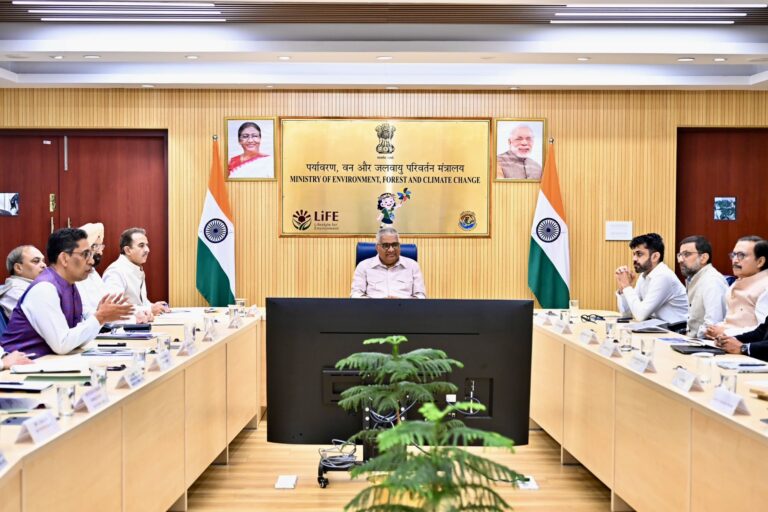
Against this backdrop, India has urged developed countries to fulfil their climate finance obligations under the Paris Agreement, stressing that financial support is indispensable for developing nations seeking to address climate change while pursuing their development goals. Delivering India’s opening statement, Narendra Bhooshan, Secretary of the Ministry of Environment, Forest and Climate Change, called for a fair, equitable and ambitious outcome, placing climate finance, adaptation and just transition at the centre of the discussions.
The Unfinished Promise of Climate Finance
At the heart of India’s position is the principle that climate responsibility must reflect the different historical contributions and economic capacities of countries. The principle of Common But Differentiated Responsibilities and Respective Capabilities (CBDR-RC), enshrined in the international climate framework, recognises that all nations share the responsibility of addressing climate change, but not necessarily in equal measure. Developed countries have historically contributed a larger share of greenhouse gas emissions through decades of industrialisation. Developing countries, meanwhile, often face disproportionate climate impacts despite having contributed relatively less to the problem. Many also have limited financial and technological resources to respond to these challenges.
India has therefore emphasised Article 9.1 of the 2015 Paris Agreement, which establishes the obligation of developed countries to provide financial resources to developing nations for climate action. According to India’s position at COP31, public finance from developed countries remains essential for supporting mitigation efforts and strengthening adaptation finance flows. The issue goes beyond the availability of money. Developing countries need predictable, accessible and affordable funding to undertake long-term climate projects without placing additional pressure on already constrained public finances. India has also advocated concessional finance that does not deepen the debt burden of vulnerable economies. Greater access to technology and the removal of barriers related to costs, intellectual property rights and trade are equally important for accelerating the transition to cleaner technologies.
The Growing Cost of Climate Adaptation
The urgency of India’s demand becomes clearer when viewed against the increasing financial requirements of climate-vulnerable countries. Rising temperatures, extreme rainfall, prolonged droughts, heatwaves and coastal hazards are placing growing pressure on infrastructure, agriculture, water resources and public health.
For many developing nations, climate action is no longer limited to reducing future emissions. It also involves protecting communities from impacts that are already being experienced. Building climate-resilient infrastructure, developing early warning systems, improving agricultural practices, securing water supplies and strengthening disaster preparedness all require substantial investment.
The financial gap remains particularly concerning for adaptation. According to the United Nations Environment Programme’s 2026 assessment cited in reports surrounding COP31, developing countries could require approximately $305 billion annually by 2035 to meet their adaptation needs. International public finance from developed nations remains far below this estimated requirement.
India has highlighted that adaptation is especially important for the Global South, where climate resilience is closely connected to development, livelihoods and poverty reduction. Without adequate financial assistance, vulnerable countries may be forced to divert resources from essential sectors such as education, healthcare and infrastructure to deal with increasingly frequent climate-related disasters.
A Just Transition Must Leave No One Behind
Another important concern raised by India is ensuring a just transition towards a low-carbon economy. Moving away from conventional energy systems requires substantial investment in renewable energy, energy storage, electricity infrastructure, cleaner industrial processes and emerging technologies.
However, the transition cannot follow a uniform pathway for every country. Developing economies must simultaneously address energy security, employment generation, industrial growth and the basic development needs of their populations. An accelerated transition without adequate financial and technological support could create new economic inequalities. India has reiterated that it will contribute its fair share towards global climate action while safeguarding the development and well-being of its people. It has also reaffirmed its confidence in multilateral climate institutions, particularly the UNFCCC and the Paris Agreement, as inclusive platforms where all countries can participate in shaping collective solutions.
The country’s call for launching a Climate Finance Work Programme at COP31 further reflects its push to make financial discussions more structured and actionable.
From Commitments to Climate Justice
As COP31 progresses, the central challenge will be to bridge the gap between international commitments and their implementation on the ground. The summit’s emphasis on implementation will have little meaning unless countries can agree on practical mechanisms for mobilising finance, transferring technology and supporting vulnerable communities. The prospect of global warming exceeding the 1.5°C threshold has made this challenge even more pressing. Every year of delayed action increases the risks faced by ecosystems, economies and communities, particularly those with the least capacity to adapt.
India’s intervention at COP31 brings the debate back to a fundamental question of climate justice: global climate action cannot succeed if the countries most in need of support are left to shoulder the financial burden alone. Ambitious targets and international declarations must be accompanied by resources, accountability and cooperation. Ultimately, the success of COP31 will not be measured merely by the commitments announced in Antalya, but by whether those commitments translate into meaningful support for countries on the frontlines of climate change. A truly equitable climate transition must ensure that financial responsibility, technological access and development opportunities are shared fairly across the world.
References:
https://unfccc.int/cop31
https://newsonair.gov.in/india-urges-developed-nations-to-fulfil-climate-finance-obligations
https://unfccc.int/topics/climate-finance/workstreams/work-programme-on-climate-finance
https://unfccc.int/sites/default/files/resource/parisagreement_publication.pdf
https://www.un.org/en/desa/cop31-explained-whats-at-stake-at-this-years-un-climate-summit
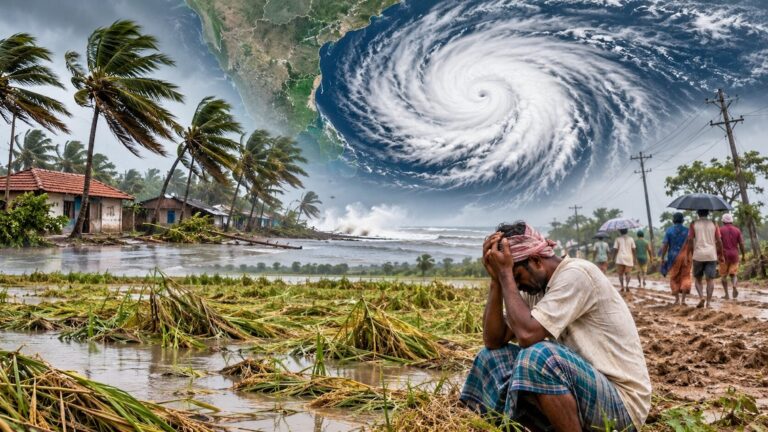
Banner Image: AI generated
Sections of this article may have been developed with the assistance of artificial intelligence tools to support research, drafting, and language refinement. All information has been reviewed, edited, and verified by the author/editor to ensure accuracy, context, and editorial integrity. The responsibility for the final content, interpretations, and conclusions rests solely with the publisher.