Physical Address
23,24,25 & 26, 2nd Floor, Software Technology Park India, Opp: Garware Stadium,MIDC, Chikalthana, Aurangabad, Maharashtra – 431001 India
Physical Address
23,24,25 & 26, 2nd Floor, Software Technology Park India, Opp: Garware Stadium,MIDC, Chikalthana, Aurangabad, Maharashtra – 431001 India

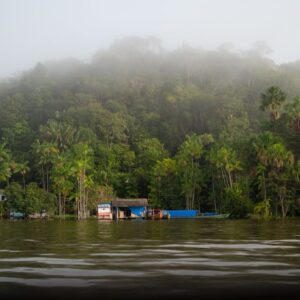
A viral post on X claims that carbon dioxide (CO₂) is benefiting forests, particularly the Amazon, and argues that concerns about climate change have been exaggerated. The post cites forest plot data and global greening trends to suggest that rising CO₂ levels are overwhelmingly positive for plant life.
However, while some of the claims contain elements of scientific truth, they omit important context and misrepresent the broader body of climate research. Here’s a closer look at the claims.
Claim 1: “CO₂ isn’t killing the forest; it’s feeding it.”
Fact: Misleading
It is true that higher atmospheric CO₂ concentrations can stimulate photosynthesis and increase plant growth under certain conditions, a phenomenon known as the CO₂ fertilization effect. However, this does not mean that rising CO₂ is universally benefiting forests.
The Amazon rainforest is increasingly experiencing the adverse impacts of climate change driven by greenhouse gas emissions. Rising temperatures, prolonged droughts, more frequent wildfires, and changing rainfall patterns are placing forests under severe stress. These factors have contributed to increased tree mortality and reduced carbon storage capacity in several parts of the Amazon.
Scientific studies show that while some trees may initially grow faster under elevated CO₂ levels, these benefits are often limited by nutrient availability, water shortages, and extreme weather events. As a result, the positive effects of CO₂ fertilization do not outweigh the broader damage caused by climate change.
Claim 2: “For years the media told us the Amazon will collapse, but field data from about 300 forest plots shows almost the opposite.”
Fact: Misleading
The claim references long-term monitoring of hundreds of forest plots across the Amazon. Such research has indeed provided valuable insights into forest growth and carbon storage.
However, the conclusion presented in the viral post omits crucial context. Long-term studies show that although intact Amazon forests historically acted as major carbon sinks, their ability to absorb carbon has weakened over time. Researchers have documented declining carbon uptake and increasing tree mortality, particularly in the eastern and southeastern Amazon, where droughts and heat stress have intensified.
The forest plot data therefore does not demonstrate that concerns about the Amazon’s future were unfounded. Instead, it illustrates a complex picture in which some areas continue to grow while others are increasingly affected by climate-related stress.
Claim 3: “Our planet overall is greener than it was a generation ago.”
Fact: Misleading
Satellite observations have detected an increase in global leaf area over recent decades, a phenomenon often referred to as “global greening.” However, this does not mean that the Earth’s green cover or forested land has increased overall.
The observed greening is largely attributed to a combination of CO₂ fertilization, agricultural intensification, irrigation, nitrogen deposition, and forest regrowth in some regions. At the same time, significant losses of natural vegetation have occurred due to deforestation, urban expansion, wildfires, and climate change. Tropical forests include parts of the Amazon that have experienced substantial forest loss, while many gains in vegetation are concentrated in managed croplands or plantations rather than natural ecosystems.
Therefore, equating “global greening” with an overall increase in green cover or healthier ecosystems is misleading. The claim oversimplifies a complex trend and ignores simultaneous declines in forests and biodiversity.
Claim 4: “More CO₂, more growth, more life.”
Fact: False/Misleading
The statement is an oversimplification of how ecosystems respond to rising CO₂ levels. Although elevated CO₂ can enhance plant growth under controlled conditions or where water and nutrients are abundant, these benefits are neither unlimited nor universal. Plant responses differ by species, soil conditions, nutrient availability, and climate.
At the same time, increasing greenhouse gas concentrations are driving global warming, resulting in more frequent and intense heatwaves, droughts, floods, and wildfires. These climate impacts reduce crop yields in many regions, damage forests, threaten biodiversity, and disrupt ecosystems. Scientific evidence therefore does not support the conclusion that increasing CO₂ automatically leads to “more growth” or “more life.”
Conclusion
The viral X post selectively highlights scientific findings about CO₂ fertilization and global greening while overlooking the broader impacts of climate change. Although elevated CO₂ can promote plant growth under certain conditions, extensive scientific evidence shows that the warming caused by greenhouse gas emissions is increasing environmental stress on forests, including the Amazon.
By presenting isolated findings without their scientific context, the post creates a misleading impression that rising CO₂ levels are broadly beneficial for ecosystems, a conclusion that is not supported by the overall body of climate research.
https://www.sciencedirect.com/science/article/abs/pii/S1043951X2400066X
https://www.researchgate.net/publication/301598223_Greening_of_the_Earth_and_its_drivers
https://www.researchgate.net/publication/273763195_Long-term_decline_of_the_Amazon_carbon_sink
https://www.sciencedirect.com/science/article/pii/S004896972307016X
Banner Image: Photo on Pexels by Lucas Da Costa