Physical Address
23,24,25 & 26, 2nd Floor, Software Technology Park India, Opp: Garware Stadium,MIDC, Chikalthana, Aurangabad, Maharashtra – 431001 India
Physical Address
23,24,25 & 26, 2nd Floor, Software Technology Park India, Opp: Garware Stadium,MIDC, Chikalthana, Aurangabad, Maharashtra – 431001 India

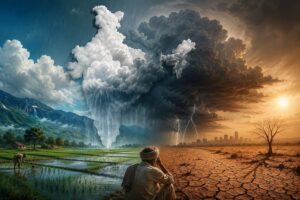
India’s monsoon is transforming, and scientists believe the answer may lie in the clouds above us. Researchers have found that a type of cloud once closely associated with the country’s rainy season has nearly disappeared from Indian skies over the past three decades. Its decline is being linked to major shifts in rainfall patterns, including more frequent cloudbursts, shorter spells of heavy rain, and longer dry periods between showers.
The findings add to growing evidence that climate change is altering the behaviour of the Indian monsoon, a weather system that supports agriculture, water supplies, and the livelihoods of millions across the country.
From Steady Showers to Sudden Downpours
For generations, the monsoon brought widespread cloud cover and prolonged periods of moderate rainfall. Such rains were crucial for replenishing groundwater, filling reservoirs, and sustaining crops during the kharif season. Scientists say these rain-bearing layered clouds have now become increasingly rare over India. In their place, towering convective clouds, known for producing intense rainfall over short durations, are becoming more common.
The result is a monsoon that is growing increasingly erratic. Several regions are witnessing prolonged dry spells interrupted by sudden, heavy downpours that can dump an entire month’s rainfall within a matter of hours.
Experts attribute much of this change to rising temperatures caused by climate change. Warmer air can hold more moisture, while rising sea surface temperatures in the Indian Ocean and the Bay of Bengal are providing additional energy to weather systems.
When these moisture-laden systems develop, they often release rainfall in short, intense bursts rather than as steady precipitation over several days.
Meteorologists warn that such changes could become more pronounced in the coming decades if global temperatures continue to rise.
Growing Challenges for Agriculture and Cities
The changing nature of rainfall is creating new challenges across sectors.
Agriculture, which continues to depend heavily on monsoon rainfall, is among the worst affected. Farmers rely on evenly distributed rainfall during the growing season, but sudden heavy rain can damage standing crops and wash away fertile topsoil. At the same time, long periods without rain between storms can place crops under severe moisture stress. Urban areas are also struggling to adapt to these changing weather patterns.
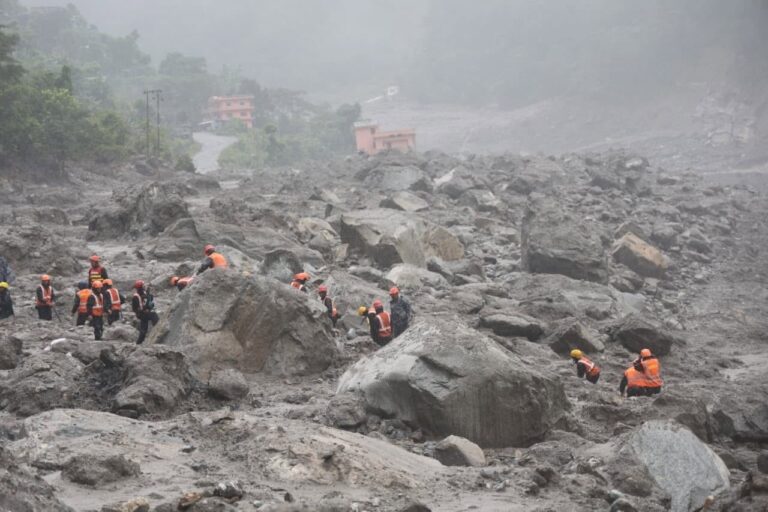
Many Indian cities were designed to manage moderate rainfall spread over several days, not extreme precipitation occurring within a few hours. As a result, incidents of urban flooding, traffic disruptions, and waterlogging have become increasingly common during the monsoon season. The Himalayan region faces even greater risks. Intense rainfall events are increasing the likelihood of flash floods, landslides, and cloudbursts, posing serious threats to communities and infrastructure in vulnerable mountain areas.
Experts say the findings underline the need for stronger climate adaptation measures, including improved forecasting systems, resilient infrastructure, and better water management practices. While the disappearance of a particular cloud type may seem like a minor atmospheric change, scientists believe it reflects a much larger shift taking place within India’s climate system.
For a nation where the monsoon remains the backbone of agriculture and water security, understanding these changes is becoming increasingly important as the country prepares for a future of more unpredictable weather.
References:
https://theprint.in/environment/monsoon-indian-clouds-climate-change/2978458
https://www.sciencedirect.com/science/article/pii/S1570644325000073
https://pmc.ncbi.nlm.nih.gov/articles/PMC11450030
Banner Image: AI Generated
Sections of this article may have been developed with the assistance of artificial intelligence tools to support research, drafting, and language refinement. All information has been reviewed, edited, and verified by the author/editor to ensure accuracy, context, and editorial integrity. The responsibility for the final content, interpretations, and conclusions rests solely with the publisher.