Physical Address
23,24,25 & 26, 2nd Floor, Software Technology Park India, Opp: Garware Stadium,MIDC, Chikalthana, Aurangabad, Maharashtra – 431001 India
Physical Address
23,24,25 & 26, 2nd Floor, Software Technology Park India, Opp: Garware Stadium,MIDC, Chikalthana, Aurangabad, Maharashtra – 431001 India

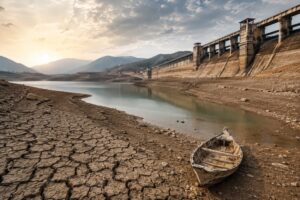
India is facing a worrying water situation as reservoir levels across the country remain alarmingly low despite the onset of the southwest monsoon. According to recent data from the Central Water Commission, the country’s 166 major reservoirs currently hold only 47.7 billion cubic metres of water, which is merely 26 per cent of their total live storage capacity of 183.5 billion cubic metres.
The figures paint a concerning picture at a time when reservoirs are expected to begin replenishing with monsoon rainfall. Instead, several regions are witnessing inadequate inflows due to delayed and uneven rains. States such as Karnataka, Tamil Nadu, Odisha, and Jharkhand are among the worst affected, with water storage levels falling to critically low levels.
Reservoirs play a crucial role in India’s water security. They supply water for irrigation, support drinking water needs in cities and villages, and provide water for industries and hydropower generation. When reservoir levels fall sharply, the consequences are felt across multiple sectors, affecting livelihoods, food production, and economic activity.
Delayed Monsoon Deepens Water Stress
The current reservoir storage is significantly lower than what was available during the same period last year. It is also below the average levels recorded over the past decade for this time of the year, highlighting the severity of the situation.
One of the primary reasons behind the shortfall has been the sluggish start to the southwest monsoon. Large parts of the country received below-normal rainfall during the early weeks of the rainy season, limiting the inflow into rivers, lakes, and reservoirs that normally begin filling during June and early July.
Rainfall deficiency has affected a substantial number of districts across the country, with many regions experiencing either deficient or severely deficient rainfall. This uneven distribution of rain has created pockets of acute water stress, particularly in southern and eastern India.
Karnataka and Tamil Nadu, both heavily dependent on monsoon-fed rivers and reservoirs, are already facing pressure on their water resources. Odisha and Jharkhand are witnessing similar challenges, with low water availability threatening irrigation supplies during the crucial kharif sowing season. The timing of this shortage makes the situation even more concerning. Farmers rely heavily on reservoir water during the initial stages of crop growth, especially when monsoon rains are delayed or erratic. Insufficient water availability during this period can reduce sowing activity and ultimately affect agricultural productivity.
Impact on Agriculture, Cities, and Industry
Agriculture is likely to bear the brunt of the reservoir crisis. Millions of farmers across India depend either directly on rainfall or on irrigation systems linked to major dams and reservoirs. Reduced water availability can delay crop planting, lower yields and increase financial stress on farming communities.
The impact, however, extends well beyond agriculture. Many cities and towns depend on reservoirs as their primary source of drinking water. If water levels continue to remain low, authorities may be forced to introduce supply restrictions or water rationing in some areas. Industries that require large volumes of water for their operations may also face challenges in the months ahead. Similarly, hydroelectric power generation could decline as reservoir operators prioritise drinking water and irrigation needs over electricity production. In many regions, falling reservoir levels often lead to increased dependence on groundwater extraction. While borewells can provide temporary relief, excessive withdrawal places additional pressure on already stressed aquifers and may create longer-term water security concerns.
The current situation once again highlights the importance of water conservation and efficient resource management. Measures such as rainwater harvesting, restoration of traditional water bodies, watershed development, and the adoption of water-efficient irrigation technologies can help reduce dependence on reservoirs alone.
Climate variability is making rainfall patterns increasingly unpredictable, with periods of intense rainfall often followed by prolonged dry spells. This changing pattern means India will need to move beyond seasonal responses and adopt long-term strategies for managing water resources more sustainably. The coming weeks of the monsoon season will be critical. Good rainfall during the remaining months could improve reservoir levels and provide relief to water-stressed regions. However, if rainfall continues to remain below normal, several parts of the country may face a difficult year marked by water shortages and increased pressure on agriculture and essential services.
The low storage levels serve as a reminder that water security cannot be taken for granted. Conserving every drop and strengthening local water management systems will be essential for building resilience against future droughts and climate uncertainties.
References:
https://www.cbip.org/ISRM-2022/images/7-8%20April%2022%20Rishikesh/Data/Session%201/TS1-KP.pdf
https://www.sciencedirect.com/science/article/pii/S0378377424004864
https://www.sciencedirect.com/science/article/pii/S0305750X21002400
Banner Image: AI-generated
Sections of this article may have been developed with the assistance of artificial intelligence tools to support research, drafting, and language refinement. All information has been reviewed, edited, and verified by the author/editor to ensure accuracy, context, and editorial integrity. The responsibility for the final content, interpretations, and conclusions rests solely with the publisher.