Physical Address
23,24,25 & 26, 2nd Floor, Software Technology Park India, Opp: Garware Stadium,MIDC, Chikalthana, Aurangabad, Maharashtra – 431001 India
Physical Address
23,24,25 & 26, 2nd Floor, Software Technology Park India, Opp: Garware Stadium,MIDC, Chikalthana, Aurangabad, Maharashtra – 431001 India


In the villages along Assam’s Brahmaputra floodplains, the silence inside Muga silkworm farms has begun to mean something different. Where farmers once expected the steady rustle of silkworms feeding on Som leaves, many now wake to trays of lifeless larvae…casualties of heatwaves, untimely rain, or sudden disease outbreaks.
For generations, Muga silk production followed nature’s clock with remarkable precision, sustaining livelihoods and shaping Assam’s cultural identity. But that clock is faltering. As climate change redraws seasonal patterns across Northeast India, scientists, farmers and traders alike are confronting an unsettling reality: the survival of the world’s only naturally golden silk may depend on how quickly an ancient industry can adapt to a rapidly changing climate.
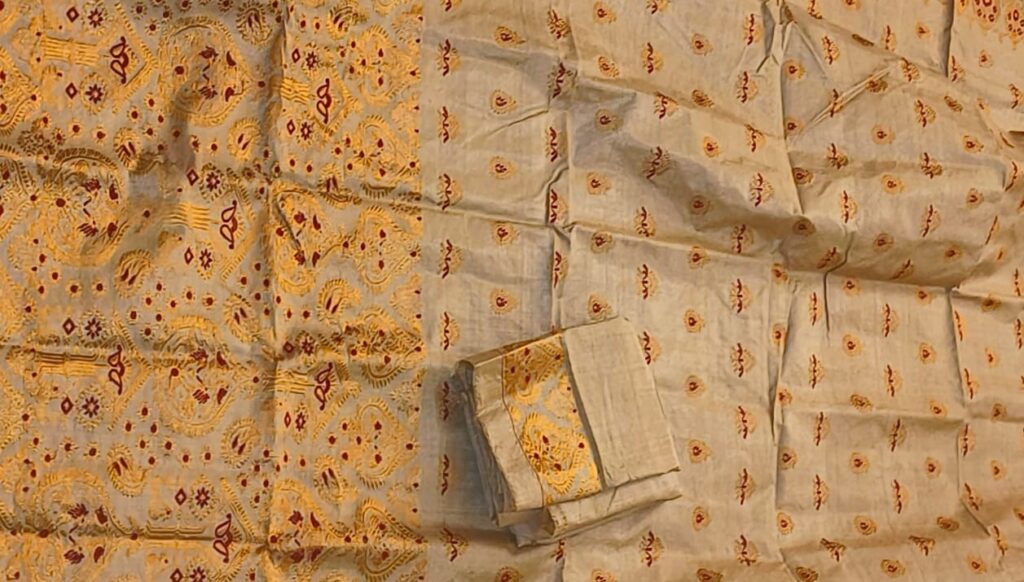
Muga silk has embodied the cultural identity and artisanal excellence of Northeast India, especially Assam, for centuries. Produced by the semi-domesticated silkworm ‘Antheraea assamensis,’ Muga is prized worldwide for its distinctive golden sheen and durability. This silk is not just an economic livelihood; it is a cultural legacy woven into ceremonies, festivals, and daily life.
Yet today, the climate crisis is stitching a new, troubling pattern into this age-old craft.
The Fragile Dance Between Silkworms and Climate
Unlike mulberry silk, Muga silkworms are reared outdoors. This makes them exceptionally sensitive to the vagaries of the weather. Temperature, humidity, rainfall patterns and seasonal rhythm are not just environmental conditions, they are the very cues that govern the life cycle of the silkworms.
Traditionally, sericulture in Assam follows four rearing cycles named after the regional seasons- Jarua (winter), Jethua (spring), Aharua (summer-monsoon) and Katia (autumn). These cycles are tuned to stable ranges of temperature and humidity, allowing silkworms to mature and transform into cocoons.
But climate change is throwing this rhythm off balance.
Rising Temperatures and Shifting Seasons
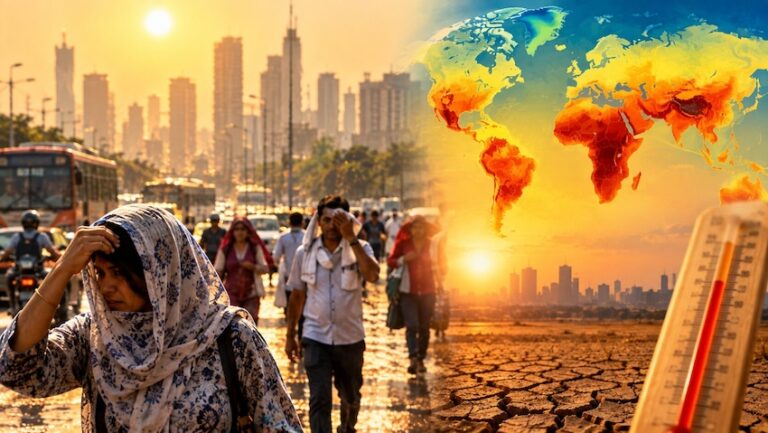
In recent years, weather patterns in the Brahmaputra Valley have become increasingly unpredictable. Average temperatures have risen, while rainfall has become erratic- swings between droughtlike periods and intense downpours are becoming the norm.
For Muga silkworms, such fluctuations are disastrous. They thrive within a relatively narrow thermal band- around 30–35°C with 80–85% humidity. Deviations beyond these limits can lead to premature death or weakened cocoons.
Farmers in districts like Dhemaji recount how sustained heat waves raise body temperatures of outdoor silkworms beyond tolerance limits. Coupled with unexpected heavy rain or humidity dips, the silkworms become more vulnerable to disease and failure.
From Floods to Disease: A Cascade of Impacts
Rainfall, once predictable, now dumps water with ferocity. Recurrent floods have inundated Som plantations- the host plant essential for Muga feeding, burying root systems in silt and killing off the foliage. Without healthy Som leaves, silkworms lack proper nutrition and cohorts fail before they even begin cocooning.
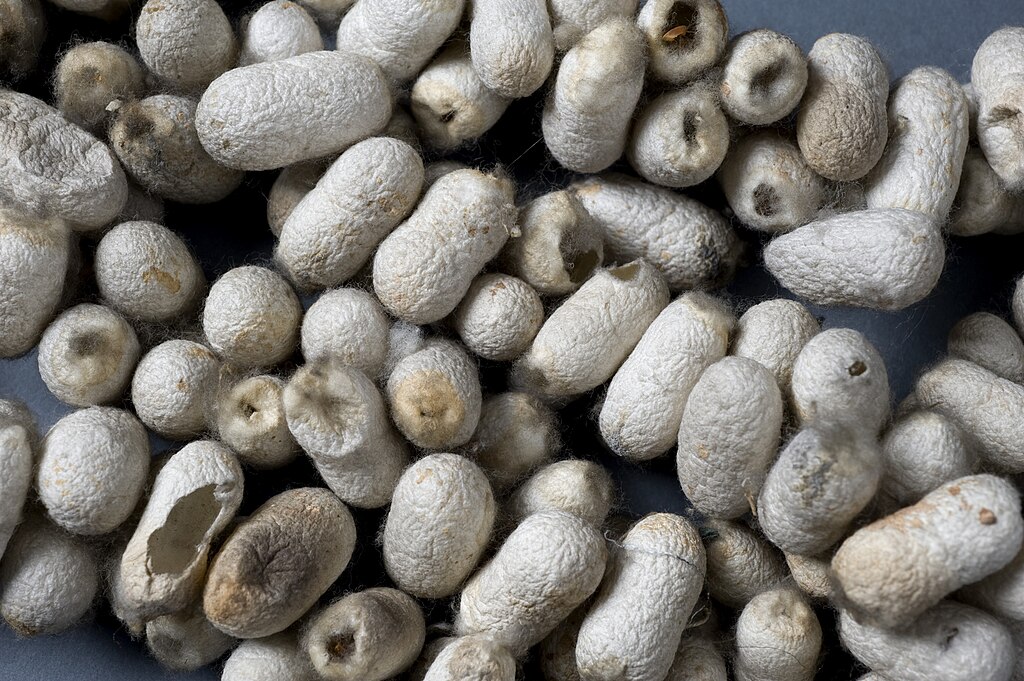
Beyond environmental stress, there are biological consequences too. Farmers in Dhakuakhana reported mass deaths of Muga silkworms this season, linked to abnormal climatic conditions and disease outbreaks. Experts have pointed to bacterial and viral infections, possibly worsened by climate-induced stress on silkworm physiology, as contributing factors.
Economic and Social Reverberations
Muga sericulture is deeply embedded in rural livelihoods. Losses due to silkworm mortality- whether from heat stress, floods or disease- ripple through entire communities dependent on cocoon rearing, silk reeling and weaving. For farmers buying seed cocoons at significant expense, sudden population crashes can mean thousands of rupees in losses per plantation.
Moreover, since Assam produces the overwhelming majority of India’s Muga silk, regional declines translate into national setbacks. A growing demand of over 5,000 metric tonnes annually contrasts starkly with actual production which has historically been below 120 metric tonnes, and climate pressures are tightening that gap further.
The industry is taking a hard hit, says Gayatri Barua of label Poojjaya By Jayashree, who have carved a niche for themselves in the global saree market with their authentic, silkmarked Muga and other handloom collections. She adds, “We get DMs from clients in Mumbai, Bengaluru, even London, asking for authentic Muga because nothing else has that natural golden sheen. And honestly, we love that the world values what Assam produces. But behind every order confirmation, there’s a call to a farmer asking, ‘How was this season?’ Some cocoons just don’t make it. When production dips, it’s not just inventory we’re short on- it’s someone’s livelihood. Climate change isn’t abstract for us; it shows up directly in our stockroom.”
Policy Gaps and Calls for Adaptation
Awareness of the climate challenge is growing, but action remains patchy. National experts such as officials from the Central Silk Board acknowledge that climate change has impacted Muga production, but warn that long-term strategies and policy shifts are still nascent.
Some analysts advocate revisiting legislation like the Seed Act to include climate-resilient strains or expand research into adaptable silkworm breeds. Others push for collaborative ventures between government, research institutions and international partners to build climate-responsive sericulture practices.
Yet, many farmers feel that state and federal agencies have not sufficiently prioritized these interventions. In regions like Dhakuakhana, communities continue to grapple with losses while awaiting scientific support and resilient solutions.
Looking Ahead: Innovation and Resilience
Despite the trove of challenges, there is momentum in some quarters. Sericulture researchers are exploring Som varieties more tolerant of variable moisture and heat. Local cooperatives are experimenting with shade-netting, partial shelters, and adaptive rearing schedules designed to buffer silkworms from extreme conditions. These small innovations signal a recognition that the ancient craft must adapt to a changing planet.
But adaptation isn’t only technical. There’s a deeper cultural urgency: preserving Muga silk is also about protecting indigenous knowledge, rural heritage and generational livelihoods that have thrived for millennia.
“Every time I ship a Muga mekhela sador or a saree to a bride in Bengaluru or a collector overseas, I feel proud because I know it carries the story of our land. But lately, there’s also worry. With the summers getting harsher and rains unpredictable, suppliers call me saying half the cocoons didn’t survive. If the climate keeps changing like this, we won’t just lose a product… we could lose a part of Assam’s soul. Muga is our golden thread. Once it breaks, it will be very hard to weave it back,” says Barua.
As dusk settles over Assam’s sericulture villages, farmers once again scan the leaves for signs of survival- tiny movements that signal another generation of silkworms has endured. The future of Muga silk now rests in this fragile vigilance, balanced between tradition and an increasingly unstable climate. Researchers speak of resilient strains, policymakers of reforms, and entrepreneurs of new markets, but on the ground the uncertainty remains immediate and personal. Each failed cocoon is a lost season; each successful harvest, an act of persistence against shifting skies. If climate change continues to unsettle the delicate ecology that sustains Muga, the loss will extend far beyond economics erasing knowledge, culture, and a living heritage spun patiently over centuries.
And somewhere beneath the changing skies, the world’s only golden silk waits on fragile leaves- uncertain whether the next season will come at all. Long before the looms fall silent, the warning may already be visible, in empty branches where silkworms once spun gold…
References:
https://dialogue.earth/en/climate/climate-change-unravels-the-golden-thread-of-assam
Insert 1, Muga Saree: Poojjaya By Jayashree
Insert 2, Silkworm Cocoon: Wikimedia Commons
Banner Image: Poojjaya By Jayashree
Sections of this article may have been developed with the assistance of artificial intelligence tools to support research, drafting and language refinement. All information has been reviewed, edited and verified by the author/editor to ensure accuracy, context and editorial integrity. The responsibility for the final content, interpretations and conclusions rests solely with the publisher.