Physical Address
23,24,25 & 26, 2nd Floor, Software Technology Park India, Opp: Garware Stadium,MIDC, Chikalthana, Aurangabad, Maharashtra – 431001 India
Physical Address
23,24,25 & 26, 2nd Floor, Software Technology Park India, Opp: Garware Stadium,MIDC, Chikalthana, Aurangabad, Maharashtra – 431001 India

A new study has revealed that people are breathing in tens of thousands of microplastic particles every day inside their homes and cars, raising fresh concerns about indoor air quality and potential health risks. The research, conducted by scientists from the Université de Toulouse, found that adults inhale an average of 71,000 microplastic particles per day. This figure is about 100 times higher than previously estimated.
Tiny Plastics, Big Problem
The study measured air samples from apartments and cars in Toulouse using advanced Raman spectroscopy and microscopy. The results showed that the median concentration of microplastics was around 528 particles per cubic meter in homes, while cars contained much higher levels at about 2,238 particles per cubic meter. Researchers noted that more than 94% of these particles were smaller than 10 micrometres, meaning they are small enough to travel deep into the lungs.
This finding is particularly worrying as such particles can bypass the body’s natural defence mechanisms, entering the lower respiratory system and potentially reaching the bloodstream. According to the researchers, these levels translate to adults inhaling roughly 3,200 particles sized between 10–300 micrometres and 68,000–71,000 particles sized between 1–10 micrometres each day.
Why Indoor Spaces Matter Most
Indoor environments, primarily cars, emerged as a significant source of exposure. People spend about 90% of their time indoors, making them more vulnerable to pollutants from synthetic fibres in carpets, furniture, paint, and car interiors. The enclosed nature of cars, combined with frequent use of artificial materials, results in significantly higher microplastic concentrations than in living spaces.
Previous studies have shown that these microscopic particles are shed from everyday items like upholstery, plastic packaging, and textiles, which continuously release fibres into the air. The findings highlight how ordinary living and commuting environments are turning into hotspots for microplastic exposure.
Health Risks and Reducing Exposure
While the long-term health effects of inhaled microplastics are still being studied, existing evidence links microplastic exposure to inflammation, hormonal disruption, cardiovascular issues, and even certain cancers. Given their size, these particles can penetrate deep into lung tissue, posing risks that may accumulate over time.
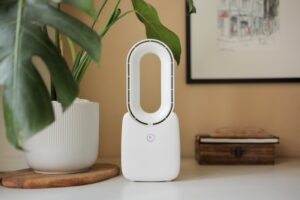
To limit exposure, experts suggest improving indoor ventilation, using HEPA air purifiers, regularly cleaning with HEPA-filtered vacuums, and reducing the use of synthetic materials in household and car interiors. Simple steps like avoiding plastic-based air fresheners and minimising heated plastic packaging can also help reduce airborne microplastic levels indoors.
References:
https://journals.plos.org/plosone/article?id=10.1371/journal.pone.0328011
Banner image:
Photo by Darryl Low on Unsplash

Comments are closed.








worming goats with ivermectin: ivermectin for maggots in dogs – IverCare Pharmacy
дом престарелых в москве
pansionat-msk005.ru
дом престарелых
лечение запоя тула
tula-narkolog003.ru
вывод из запоя цена
пансионат для лежачих москва
pansionat-msk006.ru
частный пансионат для престарелых
экстренный вывод из запоя
vivod-iz-zapoya-chelyabinsk004.ru
вывод из запоя челябинск
пансионат для пожилых людей
pansionat-tula004.ru
пансионат для лежачих после инсульта
лечение запоя челябинск
vivod-iz-zapoya-chelyabinsk005.ru
лечение запоя
экстренный вывод из запоя
vivod-iz-zapoya-chelyabinsk006.ru
лечение запоя
пансионат инсульт реабилитация
pansionat-tula005.ru
пансионат для пожилых с деменцией
экстренный вывод из запоя череповец
vivod-iz-zapoya-cherepovec007.ru
вывод из запоя цена
вывод из запоя круглосуточно череповец
vivod-iz-zapoya-cherepovec008.ru
вывод из запоя цена
Yuks?k RTP slotlar: Uduslar? tez c?xar Pinco il? – Etibarl? onlayn kazino Az?rbaycanda
вывод из запоя тула
tula-narkolog001.ru
лечение запоя
Live casino Mandiribet [url=https://mandiwinindo.site/#]Judi online deposit pulsa[/url] Live casino Mandiribet
экстренный вывод из запоя череповец
vivod-iz-zapoya-cherepovec009.ru
лечение запоя
Swerte99 app: Swerte99 casino – Swerte99 bonus
Jackpot togel hari ini: Situs togel online terpercaya – Link alternatif Abutogel
Slot jackpot terbesar Indonesia [url=https://mandiwinindo.site/#]Bonus new member 100% Mandiribet[/url] Slot jackpot terbesar Indonesia
Swerte99 online gaming Pilipinas: Swerte99 slots – Swerte99 online gaming Pilipinas
https://betawinindo.top/# Link alternatif Beta138
вывод из запоя
tula-narkolog003.ru
вывод из запоя
Online gambling platform Jollibet: Online casino Jollibet Philippines – Jollibet online sabong
вывод из запоя иркутск
vivod-iz-zapoya-irkutsk005.ru
вывод из запоя
Online betting Philippines: jollibet login – jollibet app
Link alternatif Beta138: Slot gacor Beta138 – Login Beta138
Tro choi n? hu GK88 [url=https://gkwinviet.company/#]Rut ti?n nhanh GK88[/url] Dang ky GK88
Canl? krupyerl? oyunlar: Onlayn rulet v? blackjack – Pinco r?smi sayt
Online gambling platform Jollibet: Jollibet online sabong – jollibet
https://mandiwinindo.site/# Slot gacor hari ini
1winphili: Online casino Jollibet Philippines – 1winphili
Yuks?k RTP slotlar: Qeydiyyat bonusu Pinco casino – Pinco casino mobil t?tbiq
Situs togel online terpercaya: Jackpot togel hari ini – Situs togel online terpercaya
Link alternatif Abutogel: Bandar togel resmi Indonesia – Bandar togel resmi Indonesia