Physical Address
23,24,25 & 26, 2nd Floor, Software Technology Park India, Opp: Garware Stadium,MIDC, Chikalthana, Aurangabad, Maharashtra – 431001 India
Physical Address
23,24,25 & 26, 2nd Floor, Software Technology Park India, Opp: Garware Stadium,MIDC, Chikalthana, Aurangabad, Maharashtra – 431001 India

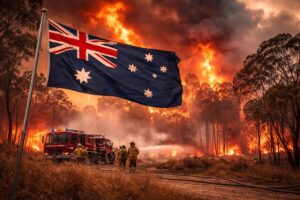
Australia’s south-east is confronting a severe climate emergency as an intense heatwave fuels widespread bushfires, prompting evacuations and urgent warnings across the region. Record-breaking temperatures combined with dangerous wind conditions have created one of the most challenging fire periods in recent years, leaving communities on edge and emergency services stretched.
Record Temperatures Intensify Fire Risk
Authorities confirmed that parts of Victoria experienced extraordinary heat during the recent wave, with some inland areas recording temperatures close to 49°C, among the highest ever documented in the state. In Melbourne, thermometers climbed above 40°C for consecutive days, placing immense strain on residents, infrastructure and emergency systems.
Meteorologists explained that a persistent high-pressure system trapped hot air over the region, creating prolonged and oppressive conditions. Such extreme heat rapidly dries out vegetation, turning forests and grasslands into highly combustible fuel. Combined with gusty winds and low humidity, the landscape became primed for fast-moving and unpredictable fires.
Bushfires Reach Emergency Level
Under these extreme conditions, multiple bushfires ignited across Victoria, with at least two classified at “emergency level” — the highest warning category. This designation signals an immediate threat to lives and property, with residents advised to leave if safe to do so or seek immediate shelter.
Fire authorities described the situation as volatile and difficult to control. Crews battled flames in punishing heat, while airborne embers sparked spot fires kilometres ahead of the main blaze. The unpredictable nature of wind shifts made containment efforts even more complex, forcing emergency teams to continuously reassess their strategies.
Several regional communities were placed under urgent alerts as fires advanced through rural areas. Firefighters worked tirelessly through the heat, aware that even minor changes in weather could dramatically alter fire behaviour. The dangerous combination of temperature, wind and dry terrain created conditions ripe for rapid escalation.
Evacuations and Property Loss Fears
Residents in high-risk zones were urged to evacuate early to avoid being trapped by fast-moving flames. While full damage assessments remain ongoing, officials indicated that there is evidence suggesting some homes may already have been destroyed. Emergency services stressed that preserving life remains the highest priority, with property damage a secondary concern during active fire events.
Total fire bans were also declared across parts of Victoria and neighbouring South Australia to reduce the risk of new ignitions. Authorities warned that even small sparks — from machinery, vehicles or outdoor flames — could trigger additional blazes under such extreme conditions.
Health Risks Amid Extreme Heat
Beyond the fires themselves, the heatwave poses serious health risks. Medical professionals warned that prolonged exposure to extreme temperatures can result in dehydration, heat exhaustion and heatstroke. Vulnerable groups, including the elderly, young children and individuals with chronic medical conditions, face heightened danger.
Hospitals reported an increase in heat-related illnesses as residents struggled to cope with sustained high temperatures. Power demand surged as households relied heavily on air-conditioning, raising concerns about potential outages that could further exacerbate health risks.
Public health officials urged people to remain hydrated, limit outdoor activity during peak heat, and check on neighbours who may need assistance. The heatwave serves as a reminder that extreme weather events can strain not only emergency services but also healthcare systems.
A Pattern Linked to a Warming Climate
Climate experts have increasingly highlighted the link between rising global temperatures and the growing intensity of heatwaves and fire seasons. Australia has experienced a series of extreme fire events in recent decades, including the devastating 2019–20 Australian bushfire season, which burned millions of hectares and caused widespread destruction.
Scientific research indicates that climate change is increasing the likelihood and severity of such heat events. Higher baseline temperatures mean that when heatwaves occur, they reach more extreme levels than in the past. In turn, this amplifies bushfire risk by drying landscapes more quickly and extending the duration of fire seasons.
The Road Ahead
The current crisis underscores the urgent need for strengthened fire preparedness and climate resilience strategies. From improved early-warning systems to enhanced land-management practices, authorities recognise the importance of adapting to increasingly volatile fire conditions.
At the same time, experts emphasise that long-term solutions must address the broader challenge of climate change. Without significant efforts to reduce greenhouse gas emissions and invest in sustainable adaptation measures, extreme heat and fire emergencies are likely to become more frequent and severe.
As firefighters continue battling blazes under punishing temperatures, communities across south-east Australia remain vigilant. The unfolding events are not only a test of emergency response capabilities but also a stark reminder of the realities of living in a warming world.
References:
https://www.bbc.com/news/articles/cpqyp9w84eeo
https://link.springer.com/article/10.1186/s12302-025-01195-6
https://www.sciencedirect.com/science/article/pii/S0048969717301754
https://wmo.int/content/climate-change-and-heatwaves
Banner Image: AI generated
Sections of this article may have been developed with the assistance of artificial intelligence tools to support research, drafting and language refinement. All information has been reviewed, edited and verified by the author/editor to ensure accuracy, context and editorial integrity. The responsibility for the final content, interpretations and conclusions rests solely with the publisher.