Physical Address
23,24,25 & 26, 2nd Floor, Software Technology Park India, Opp: Garware Stadium,MIDC, Chikalthana, Aurangabad, Maharashtra – 431001 India
Physical Address
23,24,25 & 26, 2nd Floor, Software Technology Park India, Opp: Garware Stadium,MIDC, Chikalthana, Aurangabad, Maharashtra – 431001 India


Seismic modelling and geological research are now painting a more promising picture of the offshore petroleum potential off Sri Lanka’s coast — but the environmental and social costs raise serious questions. In the deep waters of the Mannar Basin, northwest of the island, modern seismic workflows and basin modelling suggest larger volumes of hydrocarbons than previously suspected. At the same time, coastal ecosystems and communities in the region remain vulnerable, and Sri Lanka’s climate and marine-biodiversity commitments complicate the decision-making landscape.
What data reveals
The geology is compelling. Recent reprocessing of legacy seismic data combined with newer 2D and 3D seismic imaging indicates that the Mannar Basin contains structural traps, matured source rocks, and thick overburden favourable for oil and gas preservation. Much of the basin remains underexplored despite early discoveries of gas-condensate in wells like “Barracuda” and “Dorado.” These discoveries confirmed the existence of a functioning petroleum system, suggesting that deeper or more complex structures may hold commercially viable reserves. For Sri Lanka, which has long sought energy independence, this potential could be transformative.
Why energy exploration appeals
From a strategic perspective, domestic energy production could help Sri Lanka reduce its heavy dependence on imported fuel. The country currently spends a significant portion of its foreign exchange reserves on petroleum imports, leaving it vulnerable to global price shocks. Developing offshore resources could ease that burden, improve energy self-sufficiency, and create jobs in exploration, logistics, and infrastructure.
It could also attract investment in pipelines, marine terminals, and refineries — laying the groundwork for a more integrated energy economy. For a nation struggling with rising energy costs and a balance-of-payments crisis, such prospects are politically and economically attractive.
The hidden environmental toll
Yet the transition from seismic surveys to actual drilling is fraught with ecological risks. Seismic surveys use powerful sound waves to map rock layers, but these sound pulses can disturb marine mammals like whales and dolphins, causing stress, disorientation, or changes in migration routes. Research says that repeated or high-intensity seismic activity can lead to behavioural disruptions and hearing damage in sensitive species.
Drilling and production also carry the risk of pollution and spills. Even minor leaks can devastate coral reefs, mangroves, and fisheries — ecosystems vital to the livelihoods of coastal communities. The Mannar coast is home to turtle nesting sites, seagrass beds, and rich fishing grounds. A single accident could undo years of conservation and threaten the marine biodiversity that sustains local tourism and fishing.
Communities on the frontline
For local residents, the prospect of offshore energy projects raises mixed feelings. The Mannar region already struggles with saltwater intrusion into groundwater, harming agriculture and drinking-water quality. Civil-society groups have voiced growing concern about inadequate public consultation in major industrial projects — from wind farms to mineral extraction.
Media reports have highlighted that communities feel excluded from decision-making and fear ecological damage that could outlast any temporary economic benefits. These concerns underline the need for transparent governance and strong environmental oversight if oil or gas exploration proceeds.
Geological hazards add another layer of concern
Beyond environmental issues, there are safety concerns tied to Sri Lanka’s tectonic setting. A recent study found that the Mannar Rift Zone and the adjacent Comorin Ridge are capable of moderate seismic events of up to magnitude 6.9. Any offshore drilling in such zones must consider seismic risks and infrastructure resilience to avoid disasters.
The climate dilemma
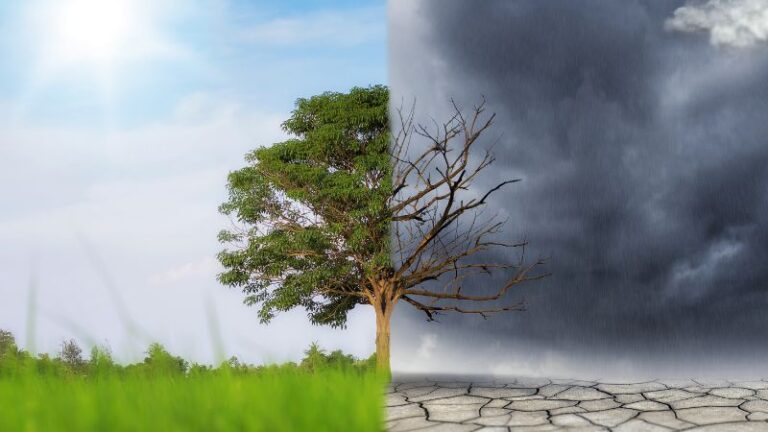
Perhaps the hardest trade-off lies in the climate calculus. Developing new fossil-fuel reserves runs counter to Sri Lanka’s national climate commitments under the Paris Agreement. While natural gas could serve as a transitional fuel, investing heavily in oil and gas infrastructure risks locking the country into carbon dependency for decades — even as global markets accelerate their shift toward renewables.
For an island already experiencing the impacts of rising sea levels and erratic monsoons, the contradiction is stark: short-term economic relief versus long-term environmental security.
How to strike a balance
If Sri Lanka chooses to move forward, governance and environmental safeguards will be crucial.
Rigorous environmental assessments: Independent and transparent Environmental Impact Assessments (EIAs) must precede any drilling, including cumulative impact studies and genuine public consultations.
Wildlife protection measures: Enforce mitigation such as ramp-up procedures for seismic surveys, seasonal restrictions, and real-time monitoring for marine mammals.
Accountability for spills: Operators must maintain funded response plans and bear full liability for accidents.
Transparent revenue management: Publish contracts, channel royalties into renewable-energy investments, and ensure communities directly benefit from resource income.
Climate alignment: Treat hydrocarbon development only as a short-term bridge strategy, while investing a share of proceeds in wind, solar, and green hydrogen.
The way ahead
The new seismic modelling offers Sri Lanka a tempting opportunity: to tap domestic energy reserves and reduce its dependence on volatile imports. But the same discovery brings a difficult question — whether economic recovery should come at the cost of environmental stability.
The answer will depend less on geology and more on governance. If Sri Lanka can pair strict environmental oversight with a transparent, climate-conscious energy strategy, it might strike a rare balance between development and conservation. Otherwise, the island risks trading its blue economy and biodiversity for a short-lived energy windfall.
References:
https://www.un.org/en/climatechange/raising-ambition/renewable-energy
https://www.mdpi.com/2073-4441/16/8/1137
https://www.nsf.gov.lk/images/nsf/jnsf/JNSF_Volume_51_No_1.pdf
https://unfccc.int/process-and-meetings/the-paris-agreement/the-paris-agreement
Banner Image: Photo by Rowan Heuvel on Unsplash