Physical Address
23,24,25 & 26, 2nd Floor, Software Technology Park India, Opp: Garware Stadium,MIDC, Chikalthana, Aurangabad, Maharashtra – 431001 India
Physical Address
23,24,25 & 26, 2nd Floor, Software Technology Park India, Opp: Garware Stadium,MIDC, Chikalthana, Aurangabad, Maharashtra – 431001 India

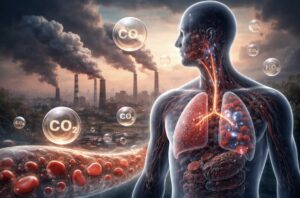
The increase in atmospheric carbon dioxide (CO₂) due to human activities is widely associated with climate change and global warming. However, recent scientific observations suggest that rising CO₂ levels may also be influencing human physiology. Researchers have found indications that the chemical composition of human blood is gradually changing alongside the steady rise in atmospheric CO₂, raising questions about possible long-term health effects.
Evidence from Long-Term Health Data
Scientists examining long-term health records analyzed blood samples collected from thousands of individuals over a period of more than two decades. The analysis focused on key indicators of blood chemistry such as serum bicarbonate, calcium, and phosphorus levels. By comparing these measurements across different years, researchers aimed to identify whether any consistent trends had emerged over time.
The findings revealed a noticeable increase in blood bicarbonate levels between the late 1990s and the early 2020s. On average, serum bicarbonate concentrations increased by around seven percent during this period. This trend closely matches the steady increase in atmospheric carbon dioxide concentrations over the same timeframe.
Over the past two decades, atmospheric CO₂ has risen significantly as a result of fossil fuel use, industrial emissions, and deforestation. The parallel increases in atmospheric CO₂ and blood bicarbonate levels suggest that the human body may be responding to environmental changes in the air we breathe.
How Carbon Dioxide Affects Blood Chemistry
Carbon dioxide plays an important role in regulating the body’s acid–base balance. When CO₂ enters the bloodstream through breathing, it reacts with water to form carbonic acid. This compound then breaks down into hydrogen ions and bicarbonate ions.
The body uses bicarbonate as a buffer to maintain a stable blood pH. Maintaining this balance is crucial because even small shifts in blood acidity can disrupt the functioning of cells, enzymes, and organs. When CO₂ levels rise, the body adjusts by increasing bicarbonate levels in the blood to prevent excessive acidity.
Another mechanism that helps maintain pH balance involves the bones. Bones contain important minerals such as calcium and phosphorus, which can be released into the bloodstream to counteract changes in acidity. Over time, this process may influence the levels of these minerals in the body.
Researchers observed that while bicarbonate levels were increasing, calcium and phosphorus levels showed a gradual decline. Although these changes remain within medically accepted ranges, the pattern suggests that the body may be compensating for long-term environmental shifts.
Possible Health Implications
Although the observed changes are relatively small, scientists believe they could have important implications if the trend continues for decades. The body’s acid–base balance affects several vital systems, including the heart, kidneys, brain, and respiratory system.
Lower calcium levels may affect muscle and nerve function, potentially leading to symptoms such as muscle cramps, tingling sensations, or fatigue. Similarly, reduced phosphorus levels can interfere with energy production in cells and affect bone health.
Imbalances in blood chemistry can also influence the cardiovascular system and kidney function. If atmospheric CO₂ levels continue to increase, the body may need to rely more heavily on its buffering systems, potentially placing additional stress on these physiological processes.
Some studies have also suggested that exposure to elevated CO₂ levels can affect cognitive performance. Increased concentrations of carbon dioxide in indoor environments have been associated with reduced concentration, increased anxiety, and impaired decision-making abilities. While the long-term health implications are still being investigated, these findings highlight the potential connection between environmental changes and human well-being.
Implications for Future Generations
One of the key concerns raised by researchers is the long-term exposure faced by younger generations. Children growing up today will experience higher atmospheric CO₂ levels throughout their lives compared to previous generations. Because their bodies are still developing, prolonged exposure to elevated CO₂ could have more pronounced physiological effects.
If current trends continue, scientists estimate that average bicarbonate levels in human blood could approach the upper limit of the normal range within the next several decades. At the same time, calcium and phosphorus levels may gradually decline toward the lower end of their normal ranges.
A New Dimension of Climate Change
For most of human history, atmospheric carbon dioxide levels remained relatively stable. The rapid increase seen over the past century represents a major environmental change that humans have not previously experienced. While the impacts of climate change on ecosystems, weather patterns, and sea levels are widely recognized, these new findings suggest that rising CO₂ may also have subtle effects on human biology.
The research highlights the possibility that climate change could influence not only the environment but also the internal chemistry of the human body. Although further studies are needed to confirm these findings and fully understand their consequences, the results point to an emerging area of concern.
The Need for Continued Research and Action
Scientists emphasize that more research is necessary to determine how widespread these changes are and what their long-term effects might be. Understanding how environmental changes interact with human physiology will be essential for assessing future health risks.
At the same time, the findings reinforce the importance of addressing the root causes of rising atmospheric CO₂. Efforts to reduce carbon emissions, transition to cleaner energy sources, and protect natural ecosystems are critical not only for stabilizing the climate but also for safeguarding human health in the long run.
https://www.ahajournals.org/doi/10.1161/CIRCULATIONAHA.120.050686
Banner Image: AI Generated
Sections of this article may have been developed with the assistance of artificial intelligence tools to support research, drafting, and language refinement. All information has been reviewed, edited, and verified by the author/editor to ensure accuracy, context, and editorial integrity. The responsibility for the final content, interpretations, and conclusions rests solely with the publisher.