Physical Address
23,24,25 & 26, 2nd Floor, Software Technology Park India, Opp: Garware Stadium,MIDC, Chikalthana, Aurangabad, Maharashtra – 431001 India
Physical Address
23,24,25 & 26, 2nd Floor, Software Technology Park India, Opp: Garware Stadium,MIDC, Chikalthana, Aurangabad, Maharashtra – 431001 India


On 23 July 2025, the International Court of Justice (ICJ) issued a historic advisory opinion that has the potential to reshape the global response to climate change. For the first time, the World Court clarified that states have legal obligations under international law to protect the climate system and that failing to do so could constitute an internationally wrongful act.
While non-binding, the opinion is being hailed as a powerful legal and moral benchmark, especially for vulnerable nations and climate justice advocates. It significantly strengthens the legal foundation for holding governments accountable for their climate actions—or inaction.
How the ICJ Got Involved?
The push for an ICJ opinion began in 2019 with a student-led campaign from the Pacific Island nation of Vanuatu. Facing existential threats from rising sea levels and worsening storms, Vanuatu took the lead in requesting an advisory opinion from the ICJ.
In March 2023, the United Nations General Assembly adopted a resolution—backed by over 130 countries—asking the ICJ to clarify two fundamental legal questions:
Over 100 countries and international bodies submitted written statements, forming a rich foundation of legal, scientific, and human rights perspectives for the ICJ to consider.
What the ICJ Ruled
The ICJ’s opinion was unanimous and comprehensive. It outlined several key findings:
a. States Have Binding Legal Duties
The Court affirmed that international law already obliges states to protect the climate system. These obligations arise from:
This means that climate action is not just voluntary—it is a legal requirement.
b. Human Rights Are at Stake
The ICJ linked climate change directly to human rights, including the rights to life, health, food, water, housing, and a healthy environment. This framing recognizes that climate harm is not abstract—it has real, tangible impacts on people’s lives, especially in vulnerable communities.
c. Failure to Act Can Be a Legal Wrong
Importantly, the Court stated that states that fail to reduce greenhouse gas emissions or that support fossil fuel development may be committing an internationally wrongful act. This opens the door to potential legal claims and reparations, especially if a causal link between emissions and damage can be proven.
d. Ambition Must Align With 1.5°C
The opinion emphasized that state climate actions must be guided by the goal of limiting global warming to 1.5°C above pre-industrial levels. In other words, simply doing “something” is not enough. States must pursue the highest possible ambition in line with scientific consensus.
Legal Concepts Clarified
The ICJ opinion brought clarity to several legal principles central to climate accountability:
Why This Opinion Matters
a. A New Legal Tool for Climate Justice
This is the first time the ICJ has issued an opinion specifically on climate change. It elevates climate obligations from soft law and political pledges to clear legal responsibilities under international law. Lawyers, courts, and activists can now cite this opinion to challenge inadequate national policies, corporate practices, or international funding decisions.
b. Empowering Small States and Vulnerable Communities
For small island nations and climate-vulnerable states, the ICJ’s opinion provides a legal shield and a moral platform to demand accountability. It validates long-standing concerns and provides a path for seeking redress through legal channels.
c. Raising Pressure on Major Emitters
The opinion places significant pressure on high-emitting countries and fossil fuel producers. Even if they are not parties to specific treaties, they remain bound by general international obligations. This increases the legal and reputational risks of continuing harmful activities like fossil fuel subsidies and new exploration licenses.
Reactions from Around the World
The opinion has drawn widespread support from environmental groups, legal scholars, and many governments. Pacific and Caribbean nations hailed it as a victory for climate justice.
Some developed countries, while supporting the principle, expressed concerns about the practical implications, especially regarding reparations and historical responsibility. Critics warned that overly broad interpretations could complicate international relations or trade.
Nonetheless, legal experts agree that the ICJ’s language was balanced, cautious, and rooted in existing law—making it difficult to dismiss.
Challenges Ahead
a. Advisory, Not Enforceable
The ICJ’s opinion is advisory, not binding. There is no enforcement mechanism or automatic penalty for non-compliance. However, advisory opinions still shape international legal norms, influence court decisions, and guide state behavior over time.
b. Proving Causation
One of the biggest hurdles in climate litigation is causation—demonstrating that a particular state’s emissions caused a specific harm. While climate science has advanced in this area, legal standards still vary between jurisdictions.
c. Political and Economic Pushback
Some governments may resist stronger action due to economic reliance on fossil fuels. There may also be geopolitical tensions, especially around loss and damage funding or historical emissions responsibility.
Implications for the Future
a. Catalyst for Climate Litigation
The opinion is likely to inspire a wave of climate litigation. Lawyers are expected to use it to strengthen cases against governments and corporations in national and regional courts. It may also influence decisions at the European Court of Human Rights and other tribunals.
b. Impact on COP30 and Global Climate Talks
With COP30 set to be held in Brazil in November 2025, the ICJ’s opinion will almost certainly shape negotiations. It will raise expectations for loss and damage funding, more ambitious Nationally Determined Contributions (NDCs), and stronger enforcement mechanisms.
c. Rethinking Business and Investment Strategies
The ruling will also impact the private sector. Companies—especially in energy, finance, and insurance—may face increased scrutiny over their climate risk disclosures and transition plans. The threat of litigation could drive faster shifts to low-carbon models.
A Legal Milestone, Not the Final Word
The ICJ’s climate opinion is a milestone in the evolution of international environmental law. It affirms that protecting the planet is not just a moral responsibility—it is a legal duty.
However, it is also a starting point. Real impact will depend on how national courts apply the opinion, how states adjust their policies, and whether civil society continues to push for meaningful change.
In the face of a rapidly closing window to limit global warming, the ICJ has handed the world a powerful legal compass. The challenge now is to ensure it guides action—not just words.
References:
https://www.icj-cij.org/sites/default/files/case-related/187/187-20250723-pre-01-00-en.pdf
https://www.icj-cij.org/node/204376
https://www.ibanet.org/Climate-crisis-ICJs-historic-opinion-sets-the-tone-for-future-litigation
ICJ: What the world court’s landmark opinion means for climate change
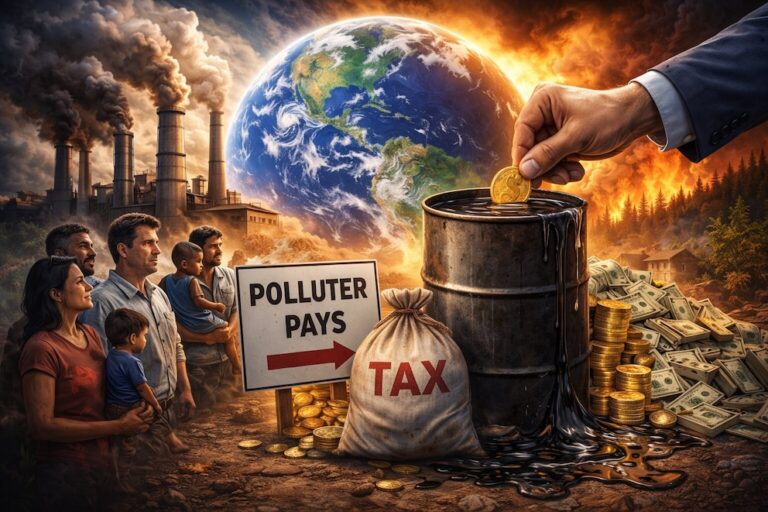
Banner Image: AI generated