Physical Address
23,24,25 & 26, 2nd Floor, Software Technology Park India, Opp: Garware Stadium,MIDC, Chikalthana, Aurangabad, Maharashtra – 431001 India
Physical Address
23,24,25 & 26, 2nd Floor, Software Technology Park India, Opp: Garware Stadium,MIDC, Chikalthana, Aurangabad, Maharashtra – 431001 India

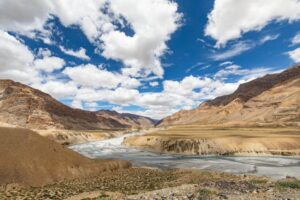
The Indus River system, lifeline to millions across Pakistan and India, has once again surged into international focus amid renewed tensions between the two neighbors. Recently, India announced it would immediately suspend the Indus Waters Treaty with Pakistan as part of a series of measures to downgrade diplomatic relations, following a militant attack in Kashmir that killed 26 tourists. Long-standing disputes over water-sharing under the Indus Waters Treaty were strained in the past as well due to growing fears of resource scarcity, with each side accusing the other of unfair usage and dam-building activities.
About the Indus river and Indus river treaty
The Indus River, one of the world’s great river systems, is the lifeline of millions across India and Pakistan. Fed primarily by glaciers in the Himalayas, the Indus provides crucial water for drinking, agriculture, and energy generation. However, climate change is now placing immense pressure on this fragile river system, creating risks that could reshape the region’s future.
The Indus Waters Treaty (IWT), signed in 1960 between India and Pakistan, governs how they share the water of the Indus River system.
Under the treaty:
Yet, while political disagreements dominate headlines, a far more profound and less visible threat looms over the Indus: climate change. Rising temperatures, unpredictable rainfall patterns, and rapidly melting glaciers in the Himalayas are quietly but drastically altering the river’s flow, posing serious risks not just to bilateral relations, but to the region’s food security, economy, and ecological balance. Understanding the impacts of climate change on the Indus River system is therefore not only a scientific concern but a geopolitical imperative.

Impact of Climate Change on the Indus River System
One major consequence is the accelerated melting of glaciers. Rising global temperatures have increased glacial melt rates, leading to temporarily higher river flows. While this may seem beneficial in the short term, experts warn that it will eventually cause severe water shortages as the glaciers shrink and disappear. According to studies, the Indus basin could face a water deficit of nearly 50% by 2030, making it one of the most water-stressed regions in the world.
In addition to glacial loss, the Indus is suffering from erratic rainfall patterns. Climate change is altering monsoon cycles, leading to frequent floods during some years and extreme droughts in others. This unpredictability threatens crop yields, disrupts rural livelihoods, and increases the risk of food insecurity across South Asia.
Kate Diamond, Wilson Center’s Environmental Change and Security Program says, “Water scarcity in the Indus Basin is often attributed to water mismanagement, and climate change also plays an important role.”
Water quality in the Indus is also deteriorating. Higher temperatures and industrial pollution are contaminating river water, endangering aquatic ecosystems and public health. Biodiversity in the Indus Delta — once rich with mangroves and unique species — is in sharp decline.
The compounded impacts of climate change on the Indus River go beyond the environment. They threaten regional stability, particularly between India and Pakistan, who already share a sensitive relationship over water resources governed by the Indus Waters Treaty of 1960. As water availability shrinks, tensions could intensify, making cooperation even more essential.
Addressing the crisis requires urgent action. Both countries must invest in sustainable water management practices, shift towards climate-resilient agriculture, and promote glacial research. Regional collaboration, rather than competition, will be critical to preserving the Indus for future generations.
References:
https://climate-diplomacy.org/case-studies/water-conflict-and-cooperation-between-india-and-pakistan
Adil Najam: Pakistan’s Security Problems Distract From Climate Vulnerabilities
Photo by Bibhukalyan Acharya on Pexels
https://www.pexels.com/photo/confluence-of-zanskar-and-indus-rivers-in-leh-ladakh-india-13905849
Banner Image: Photo by Akshita Garg on Pexels
https://www.pexels.com/photo/brown-mountains-under-blue-sky-and-white-clouds-6002627

Comments are closed.







0ki6zn