Physical Address
23,24,25 & 26, 2nd Floor, Software Technology Park India, Opp: Garware Stadium,MIDC, Chikalthana, Aurangabad, Maharashtra – 431001 India
Physical Address
23,24,25 & 26, 2nd Floor, Software Technology Park India, Opp: Garware Stadium,MIDC, Chikalthana, Aurangabad, Maharashtra – 431001 India


If headlines could melt ice caps, the planet might be safer. But as 2026 unfolds, the United States under President Donald J. Trump is doing the opposite- withdrawing, dismantling, and doubling down on fossil fuels even as climate impacts intensify worldwide. What began as a retreat from global climate cooperation is now evolving into a broader policy shift with tangible consequences for emissions, energy markets, and international trust.
A Historic Withdrawal from Global Climate Cooperation
In early January 2026, the Trump administration announced that the United States would withdraw from the United Nations Framework Convention on Climate Change (UNFCCC) and dozens of other international bodies. The UNFCCC is the foundational climate treaty that underpins global efforts to curb greenhouse gas emissions, host annual COP climate talks, and implement agreements like the Paris Agreement. With this move, the U.S. became the only UN member state no longer party to the UNFCCC, a decision critics say jeopardises both global cooperation and U.S. influence.
The administration also disengaged from the Intergovernmental Panel on Climate Change (IPCC), the world’s foremost scientific body assessing climate risks and response options. Although IPCC participation is not governed by a formal treaty, U.S. withdrawal effectively sidelines American scientists from the global climate assessment process.
UN climate chief Simon Stiell described the decision as a “colossal own goal,” warning that it weakens U.S. security and prosperity while isolating Washington from critical scientific and diplomatic forums.
This Is More Than Symbolism- It Has Real Consequences
In January 2025, President Trump signed Executive Order 14162, directing the U.S. to withdraw from the Paris Agreement for a second time. According to a Congressional Research Service brief, the withdrawal formally took effect in January 2026, reversing commitments reinstated under the Biden administration and ending U.S. participation in the agreement’s reporting and review mechanisms.
The practical fallout is now clearer.
Climate finance dries up: U.S. exit threatens contributions to international funds such as the Green Climate Fund, which supports mitigation and adaptation in vulnerable countries.
Global influence erodes: Analysts warn the U.S. is surrendering its seat at the table just as climate finance rules, carbon markets and clean-energy standards are being shaped — potentially benefiting competitors like China.
Human rights risks grow: Climate change increasingly affects access to food, water and housing, and rights groups argue U.S. withdrawal weakens global protection mechanisms.
From Exit to Expansion: Fossil Fuels Back on the Agenda
Since the article’s initial drafting, the administration has moved beyond withdrawal into active fossil fuel expansion.
On January 26, 2026, the U.S. Interior Department took the first formal step toward offering new offshore oil and gas drilling leases off California, opening a public comment process for potential leasing as early as 2027. It would be the first such federal move in California waters since 1984.
California officials and environmental groups warned the proposal threatens marine ecosystems and coastal economies- and contradicts global climate goals at a moment when emissions cuts are urgently needed.
Rhetoric Over Reality at Davos
The policy shift was matched by rhetoric at the 2026 World Economic Forum in Davos, where Trump dismissed renewable energy policies as the “greatest hoax in history” and called the Green New Deal a “Green New Scam.” He singled out wind power as ineffective and destructive.
Fact-checks quickly undercut those claims. PBS NewsHour noted that China- which Trump suggested lacked wind power- actually leads the world, accounting for roughly 44% of global installed wind capacity.
Courts, States and the World Push Back
Even as federal policy retreats, legal and sub-national resistance is growing.
U.S. courts dealt setbacks to federal efforts to stall renewable energy projects. In January, judges allowed Equinor’s New York offshore wind project and Dominion Energy’s Virginia offshore wind project to resume after administration-linked pauses.
Meanwhile, a federal judge dismissed a Trump administration lawsuit aimed at blocking Michigan’s climate-related case against fossil fuel companies, allowing state-level climate litigation to proceed.
Internationally, the contrast is stark. European governments have reaffirmed wind energy expansion plans despite U.S. criticism, signalling continued momentum outside Washington.
What This Means for the Climate
Climate change does not pause for elections or executive orders. Scientists warn that without coordinated global mitigation, warming will intensify extreme weather, sea-level rise and ecosystem loss. Withdrawing from climate institutions- while expanding fossil fuel extraction- risks locking in higher emissions precisely when rapid reductions are needed.
Yet the global energy transition continues. Clean energy investment remains strong worldwide, driven by economics, technology and climate risk- not U.S. federal policy alone.
For now, the Trump administration’s climate agenda marks a clear departure from decades of U.S. climate diplomacy. In a warming world, retreating from cooperation- and expanding fossil fuels- may prove far costlier than engagement.
References:
https://cen.acs.org/environment/climate-change/Trump-pulls-US-another-major/104/web/2026/01
https://cen.acs.org/environment/climate-change/Trump-pulls-US-another-major/104/web/2026/01
https://www.congress.gov/crs-product/R48504
https://time.com/7208955/trump-paris-climate-agreement-withdraw-impact
Withdrawal from UNFCCC and IPCC sidelines U.S. from key global decision-making
https://www.hrw.org/news/2026/01/12/us-retreat-from-global-climate-cooperation-threatens-rights
https://www.pbs.org/newshour/politics/fact-checking-trumps-greenland-focused-davos-speech
https://www.forbes.com/sites/alanohnsman/2025/07/28/green-energys-unstoppable-global-growth
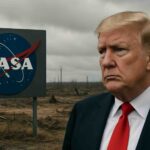
Banner Image: AI Generated. Photo of Donald Trump by Library of Congress on Unsplash
Sections of this article may have been developed with the assistance of artificial intelligence tools to support research, drafting and language refinement. All information has been reviewed, edited and verified by the author/editor to ensure accuracy, context and editorial integrity. The responsibility for the final content, interpretations and conclusions rests solely with the publisher.