Physical Address
23,24,25 & 26, 2nd Floor, Software Technology Park India, Opp: Garware Stadium,MIDC, Chikalthana, Aurangabad, Maharashtra – 431001 India
Physical Address
23,24,25 & 26, 2nd Floor, Software Technology Park India, Opp: Garware Stadium,MIDC, Chikalthana, Aurangabad, Maharashtra – 431001 India

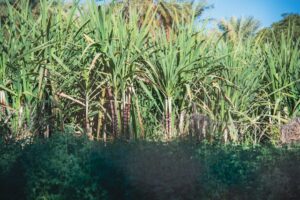
The once reliable rains now arrive erratically, leaving fields parched between storms. Across Sri Lanka’s cane-growing regions, farmers report unprecedented heat and drought. In the Monaragala district, historically known for its rice and sugarcane production, average temperatures have risen by approximately 1°C over the past 40 years. At the same time, the once-reliable inter-monsoon and northeast monsoon rains have become unpredictable, with prolonged dry spells and off-season downpours disrupting planting schedules. Groundwater and reservoirs are running dangerously low, forcing desperate farmers to pump from deep wells at great expense. In short, the conditions that nurtured Sri Lanka’s sugarcane are unravelling under climate stress.
Ampara and Monaragala lie in the island’s dry zone, where climate change is especially acute. The Gal Oya basin (Ampara) is “five degrees hotter and receives half the rainfall” of Sri Lanka’s wet zone. In this harsh environment, policy planners have long championed sugarcane – a crop that requires roughly one-tenth the water of rice – as a reliable source of cash. But even drought-adapted cane fields now feel the squeeze. Farmers have observed that erratic rainfall and rising temperatures are beginning to erode yields. And the situation is not confined to the dry zone: a recent study warned that future temperature increases could “make traditional farming almost impossible during key growing seasons” across much of the country.
Meanwhile, Sri Lanka has recently experienced a shift between climate extremes. In 2023, the country suffered both “deadly flooding and a drought that devastated farmlands,” and in 2024, major floods struck again. These swings mean that cane fields may face both drying roots and inundating rains within the same year. In short, Sri Lanka’s sugarcane regions are living at the front lines of climate change, and the local economy is feeling it.
Sugar Shortages and Import Dependency
Sri Lanka produces only a sliver of the sugar its people consume. By 2019, the island required approximately 608,000 tonnes of sugar, yet only around 8–9% of that demand was met by domestic mills. In practical terms, the two operating sugar factories (Pelwatte in Monaragala and Sevanagala in Matale) together produced barely 40–50 thousand tonnes, with the rest (nearly 90–92%) imported. This dependency comes at a high cost: Sri Lanka currently spends roughly Rs 35.7 billion per year (approximately US$150 million) on sugar imports. For more details, refer to a recent research study.
These figures have inspired ambitious self-sufficiency targets. In 2016, the government announced a goal of achieving 100% domestic sugar production by 2025. A project to reopen the old Kantale factory, along with plans for numerous new plantations, was unveiled to meet this target. At the time, it seemed feasible – there is ample cane-suitable land and a traditionally cane-friendly climate. But the accelerating climate impacts now cast doubt on the plan. Even recent investments have yielded only modest gains: local output is still estimated to cover perhaps 10-15% of national needs. In other words, Sri Lanka’s sugar balance is very tight. If heatwaves or droughts further cut yields, farmers and the state will need to import even more sugar at higher prices.
For perspective, the shortfall is massive. A 2020 industry report noted that Sri Lankan demand (550,000 tonnes annually) was met by only about 8% of local production. By contrast, the remaining 92% came from imports (mainly from Brazil and India) at a cost that year of roughly Rs 20–35 billion. (Recent data show imports are still around 90% of supply .) In practical terms, if climate change were to collapse Sri Lanka’s sugarcane output, the nation would pay even more for imported sugar. That burden ultimately falls on consumers and the economy as a whole. Given this context, climate impacts on the cane sector are not just an agricultural problem, but also a food security and economic issue.
Innovation and Adaptation in the Cane Belt
Farmers and researchers are scrambling to adapt sugarcane farming to the new climate reality. The Sri Lanka Sugarcane Research Institute (SRI) has launched several initiatives to help the industry survive harsher conditions. Notably, in 2023, SRI released four new sugarcane varieties that promise higher sugar yields and greater resilience to stress. These cultivars were developed after two decades of trials; three of them maintain high productivity even under rain-fed (non-irrigated) conditions. In practical terms, their sugar recovery (i.e., the percentage of the cane that becomes sugar) rises to about 10–13%, up from just 6–8% in older varieties. This boost makes cane farming more profitable and lowers farmers’ dependence on irrigation water.
Speaking with CFC, Dr. Chandrajith De Silva, Director of the Sri Lanka Sugarcane Research Institute, said that the institute has taken necessary steps to increase the sugarcane harvest in Sri Lanka. He pointed out that currently, 30,000 hectares of sugarcane land in Sri Lanka, but it can be increased up to 200,000 hectares.”From conducting research and inventing new crop species, we are doing our task. Implementing the output of our study is the task of the government, he added.
“As C4-type plants, sugarcane plants face both positive and negative impacts of climate change, ” he added. He further stated that sugarcane species that can face climate change with resilience have already been introduced.
According to Dr Chandrajith, climate change is only one of the factors negatively impacting the sugarcane industry in Sri Lanka. There are some other factors at play too.
“We have two to three sugar manufacturing factories in Sri Lanka. The number can be increased up to 10-12 factories, and if we increase the sugarcane cultivation lands and factories, there is no need to import sugar, and the country will be self-sufficient in sugar”, he added.
“One of the main hindrances to sugar cultivation in the country is farmers not adapting to changing weather patterns. More awareness is needed for that.”, De Silva said.
According to research conducted by the Sugarcane Research Institute of Sri Lanka, the erratic rainfall pattern and shifts in monsoonal weather, which are boosted by climate change, will significantly affect future sugarcane production in Sri Lanka. The primary long-term sustainable adaptation option for cultivating sugarcane under a changing climate is the selection of varieties with higher yields and tolerance to abiotic and biotic stresses resulting from the effects of climate change. The main short-term adaptation options are improving efficient cultural practices and cropping systems, as well as adhering to soil and moisture conservation practices, which the sugarcane Research Institute has already recommended. Regular monitoring of pests, diseases, and weeds in sugarcane plantations helps to mitigate the impact of altered diversity of flora and fauna under changing climatic conditions. Thus, a comprehensive research program, including variety improvement, development of new technologies and/or improvement of existing crop management practices, and continuation of studies on the dynamics of pest, disease, and weed populations in sugarcane plantations, is required. The research paper can be read here
The question facing Sri Lanka is stark: can it transform its sugar industry fast enough to outpace the climate, or will domestic cane production wither and the country’s sugar habit remain entirely satisfied by foreign fields? So far, the signs point towards a mixed outcome – gains in technology and policy, but a climate challenge that is only growing fiercer.
References:
https://island.lk/monaragala-wilting-under-the-scorching-impact-of-climate-change
https://echelon.lk/lolcs-sugar-rush-investment
https://www.mdpi.com/2073-4395/14/9/2059
Sri Lanka Aims to Become Self Sufficient in Sugar
Amid socioeconomic slump, new sugar cane varieties offer hope in Sri Lanka
Banner Image:

Comments are closed.






What i do not realize is in fact how you are no longer actually much more wellfavored than you might be right now Youre very intelligent You recognize thus considerably in relation to this topic made me in my view believe it from numerous numerous angles Its like men and women are not fascinated until it is one thing to do with Lady gaga Your own stuffs excellent All the time handle it up
enclomiphene: enclomiphene for sale – enclomiphene for men
¿Buscas una piscina de jardín ? Las opciones de Intex y Bestway ofrecen diseños versátiles para usuarios de todas edades.
Los modelos con armazón garantizan resistencia extrema , mientras que los modelos hinchables son ideales para niños .
Equipos como el Steel Pro incluyen filtros integrados , asegurando agua cristalina .
En patios pequeños, las piscinas modulares de 4 m se adaptan perfectamente .
Además, accesorios como cobertores térmicos, barandillas resistentes y juegos inflables mejoran la experiencia .
Con garantía del fabricante , estas piscinas cumplen estándares europeos.
https://www.mundopiscinas.net
Подбирая компании для квартирного перевозки важно учитывать её лицензирование и опыт работы .
Изучите отзывы клиентов или рекомендации знакомых , чтобы оценить профессионализм исполнителя.
Сравните цены , учитывая расстояние перевозки , сезонность и услуги упаковки.
http://footwear.ua/forum/index.php?act=addform&act_after=topiclist&id_group=7&id_parent=0
Убедитесь наличия страхового полиса и уточните условия компенсации в случае повреждений.
Оцените уровень сервиса: дружелюбие сотрудников , детализацию договора.
Проверьте, есть ли специализированные автомобили и упаковочные материалы для безопасной транспортировки.
Patek Philippe — это вершина механического мастерства, где соединяются прецизионность и художественная отделка.
С историей, уходящей в XIX век компания славится авторским контролем каждого изделия, требующей многолетнего опыта.
Изобретения, включая автоматические калибры, укрепили репутацию как новатора в индустрии.
https://patek-philippe-shop.ru
Лимитированные серии демонстрируют вечные календари и ручную гравировку , подчеркивая статус .
Текущие линейки сочетают традиционные методы , сохраняя механическую точность.
Это не просто часы — символ семейных традиций, передающий инженерную элегантность из поколения в поколение.