Physical Address
23,24,25 & 26, 2nd Floor, Software Technology Park India, Opp: Garware Stadium,MIDC, Chikalthana, Aurangabad, Maharashtra – 431001 India
Physical Address
23,24,25 & 26, 2nd Floor, Software Technology Park India, Opp: Garware Stadium,MIDC, Chikalthana, Aurangabad, Maharashtra – 431001 India
Methane (CH₄) is a potent greenhouse gas, second only to carbon dioxide in its heat-trapping power, and it accounts for roughly 30% of human-driven global warming. Unlike CO₂, however, methane lingers in the atmosphere for only about a decade before breaking down—a short “residence time” that means changes in its emissions can influence the climate relatively quickly. It is released from agricultural activities such as livestock and rice paddies, landfills, and fossil fuel operations, as well as natural sources like wetlands. At the same time, methane is removed by natural “sinks,” including soil uptake and sunlight-driven chemical reactions in the atmosphere. Because it is both powerful and short-lived, methane has emerged as a prime target for rapid climate mitigation. “Methane is a very powerful greenhouse gas with a short lifetime, which gives us more control over it,” says Qiang Fu of the University of Washington, lead author of a new study examining methane loss in the stratosphere. “We will be in a better position, policy-wise, if we understand more about how it accumulates.” In other words, cutting methane can quickly slow warming—but only if scientists can accurately track where it goes once it enters the sky.
Previous understanding of methane’s atmospheric loss
Traditionally, estimates of how fast methane is destroyed have come from computer models rather than direct measurement. Climate scientists use complex chemistry-climate simulations to calculate how methane is oxidized in the air. However, those model predictions have been uncertain, especially for thestratosphere, the upper atmosphere above about 10 km altitude. In practice, researchers noticed a puzzling mismatch between two ways of accounting for methane: the top-down approach, which starts from observed atmospheric concentrations, and the bottom-up approach, which tallies emissions and modeled sinks from all sources. These two methods did not agree. Bottom-up inventories tended to show that methane sources exceeded sinks by a wider margin than top-down observations implied. In effect, that gap suggested there might be “missing” methane sinks or errors in the models.
New satellite observations shed light on the stratosphere
The recent University of Washington study used satellite data to tackle this problem directly. Fu and his student Cong Dong analyzed public satellite observations from 2007–2010 to estimate how much methane is destroyed in the stratosphere. Their approach provides the first observational measure of stratospheric methane loss, rather than relying purely on models. The result was that the stratospheric sink is stronger than previously thought: more methane is broken down in the stratosphere than earlier models predicted . In other words, the natural “cleansing” of methane high in the sky is more efficient.
This finding is important because of the fine balance involved. Fu notes, “Total methane emissions and removal are large values. Their difference, or imbalance, is a small but critical value. It determines methane trends over time.” Even a small upward revision in the removal rate can substantially change our view of how quickly methane accumulates.
Reconciling the methane budget
With the satellite-based sink in hand, the authors recalculated the global methane budget. Plugging the new loss rate into the budget equation essentially eliminates the old discrepancy: the bottom-up and top-down estimates now match closely. In practical terms, the “missing methane” seen in inventory calculations can be accounted for by the stronger stratospheric removal. This convergence is a major advance. As Fu puts it, “Narrowing it down improved our confidence in the methane budget and imbalance estimates, which determine the change in atmospheric methane levels.” By aligning the two approaches, scientists can now be more certain about how much of our emissions remain in the air and how much are naturally removed.
Secondary effects: ozone and water vapor in the stratosphere
Methane’s fate in the stratosphere also touches on other atmospheric processes. When methane is oxidized by sunlight at high altitude, it produces water vapor and reactive hydrogen compounds. The study notes that “methane reactions in the stratosphere create water vapor, another greenhouse gas, and impact ozone chemistry, impacting the protective ozone layer.”In short, more methane breakdown means extra moisture enters the upper atmosphere, and ozone-producing or destroying reactions can change. These effects are significant: enhanced stratospheric water vapor can itself influence climate, and any alteration to the ozone layer affects how much ultraviolet radiation reaches Earth. By pinning down the methane loss rate, the new research helps scientists better predict these linked outcomes like ozone recovery, stratospheric humidity, etc. in climate models.
Implications for climate models and policy
This improved understanding will feed back into climate modeling and policymaking. Climate models use methane sink rates to project future warming. A higher stratospheric sink means methane is slightly shorter-lived than assumed, so models will adjust predictions of atmospheric concentration growth. For policymakers, the result provides clearer guidance on methane’s leverage as a climate control. Mitigating methane is already seen as a fast way to slow near-term warming, since cutting emissions shows effects within years. These findings reinforce that strategy: with better knowledge of sinks, we know more precisely how emissions translate into atmospheric methane and warming.
As Fu noted, understanding the balance of sources and sinks “puts us in a better position, policy-wise” to manage methane .In practice, this means cleaner fossil fuel operations, better waste handling, and improved agriculture practices will have predictable climate payoffs. The study also strengthens international efforts like the Global Methane Pledge, which aims to cut methane emissions by 30% globally by 2030. By resolving a key uncertainty in the global methane budget, it provides a firmer scientific foundation for setting and measuring such targets. In summary, the work not only refines our climate models but also bolsters confidence that reducing methane will yield the expected benefits.
Looking ahead
The University of Washington’s satellite-based analysis represents a pivotal step in methane science. By anchoring the stratospheric sink in observations, it bridges a critical gap between measurements and models. Future work will likely extend these methods to longer time series and newer satellites, continuing to sharpen the global methane picture. For now, the takeaway is clear: methane’s atmospheric lifetime is governed by a strong stratospheric sink, and accounting for it removes long-standing budget discrepancies. This clarity helps ensure that when we cut a ton of methane, we know exactly how much warming that prevents- an essential insight for climate action.
References
https://scienmag.com/uw-scientists-quantify-stratospheric-methane-loss-using-satellite-data
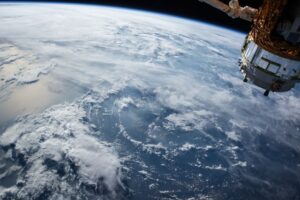
Banner Image: Photo by NASA on Unsplash
Sections of this article may have been developed with the assistance of artificial intelligence tools to support research, drafting and language refinement. All information has been reviewed, edited and verified by the author/editor to ensure accuracy, context and editorial integrity. The responsibility for the final content, interpretations and conclusions rests solely with the publisher.