Physical Address
23,24,25 & 26, 2nd Floor, Software Technology Park India, Opp: Garware Stadium,MIDC, Chikalthana, Aurangabad, Maharashtra – 431001 India
Physical Address
23,24,25 & 26, 2nd Floor, Software Technology Park India, Opp: Garware Stadium,MIDC, Chikalthana, Aurangabad, Maharashtra – 431001 India
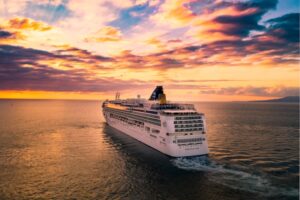
The shipping industry has made history by becoming the first sector to establish a global emissions pricing framework. This landmark decision marks a pivotal moment in the fight against climate change, as it sets a precedent for holding an entire industry legally accountable for its carbon emissions under a worldwide system.
The agreement was finalized during last week’s International Maritime Organization (IMO) meeting in London (Friday, April 11). Given that the IMO represents 97% of the world’s shipping fleet, its policies carry significant weight, ensuring widespread adoption and impact across the sector.
Cruise ship companies will have to pay for the emissions from cruise ships in the future, as they agreed very recently at that meeting.
Ship owners will have to pay up to 380 USD per ton of Carbon Dioxide released by their cruise ships, and over time, the cost will become stronger. Cruise ships must reduce their emissions by up to 43%; if not, they will have to pay for extra emissions.
The IMO is a United Nations agency dedicated to navigation, vessel standards, and safety. In the latest discussions, countries agreed to pay fines to the IMO if emission reduction targets are not met. This is the first time that any industry has agreed to pay a fine for emissions at the global level.
Several countries that usually oppose such climate obligations, like Russia and Saudi Arabia, dragged their feet. However, with the support of other countries, it was approved.
According to international media reports, the United States withdrew from the decarbonisation talks before other countries agreed. However, it`s unclear yet whether the United States’ withdrawal can impact the overall implementation of the process.
As per the IMO, the process will collect around ten billion USD per year, which is relatively less than expected, as discussions have been happening for around ten years. The money will go to a net-zero fund, a dedicated fund of the IMO to develop clean energy methods,etc.
The rules are expected to encourage companies to use sustainable energy solutions and reduce their use of fossil fuels.
IMO Secretary-General Arsenio Dominguez called this agreement (Marpol Annexe VI) a step forward. “The approval of draft amendments to Marpol Annexe VI mandating the IMO net-zero framework represents another significant step in our collective efforts to combat climate change, to modernise shipping and demonstrates that IMO delivers on its commitments,” he said.
However, some countries, like Vanuatu, expressed their displeasure with the agreement and said that it was diluted from its initial stage when it reached the final stage. More details can be found here. and here
This can be considered a brave step in the global campaign to face climate change, and also many experts in the climate change field are hopeful about this new development
https://skift.com/2025/04/14/new-global-rules-to-force-cruise-ships-to-pay-for-carbon-emissions
Banner Image: Photo by Alonso Reyes on Unsplash